The Fable Of The Marbles And The Teacher

By Aitor Calero García

Once upon a time, in a small and remote village across the mountains, in a faraway country, there was a small rural school. It was one of those schools with children of different ages together in a single classroom, a village school like any other, but this is a minor detail. It had a strict teacher. However, everybody in the village loved the teacher, as she was just and fair and she cared very much for her pupils. She was the kind of teacher who gave advice like “you always have to not live beyond your means.”

Continue reading

The Race to the Bottom Produces Regulators who are Invertebrates and Epidemics of Fraud

By William K. Black
(Cross posted at Benzinga.com)

I examine how highly conservative newspapers are covering the interplay of widespread “control frauds” by the world’s most elite banks, the carefully structured de-evolution of financial regulators through descent from the subphylum Vertebrata into the phyla of the invertebrates, and the global failure to prosecute the elite frauds that drove the ongoing financial crisis.  The three factors are interrelated.  Vigilant financial regulators serving as the vital “regulatory cops on the beat” are essential to the successful prosecution of large numbers of elite financial frauds.  Continue reading

The Emancipation of the Unemployed

By Dan Kervick

An important anniversary is approaching.  On January 1, 1863, Abraham Lincoln signed and issued the Emancipation Proclamation.  The proclamation that sounded the final end of the depraved institution of American slavery was presented to the nation and the world as an emergency war act, a “fit and necessary” measure for suppressing an armed rebellion against the authority and government of the United States.  The language of the Emancipation Proclamation is restrained by the customary legalisms of government writ; and yet, vibrating through and beyond the tight cords of executive propriety, the drama and permanence of Lincoln’s statement sound clearly, along with the solemn national commitment to sustain the liberation of the newly freed men and women by force of arms:

And by virtue of the power, and for the purpose aforesaid, I do order and declare that all persons held as slaves within said designated States, and parts of States, are, and henceforward shall be free; and that the Executive government of the United States, including the military and naval authorities thereof, will recognize and maintain the freedom of said persons.

Continue reading

Wall Street’s War Against the Cities: Why Bondholders Can’t – and Shouldn’t – be Paid

By Michael Hudson

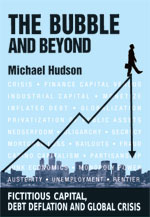
The Bubble and BeyondThe pace of Wall Street’s war against the 99% is quickening in preparation for the kill. Having demonized public employees for being scheduled to receive pensions on their lifetime employment service, bondholders are insisting on getting the money instead. It is the same austerity philosophy that has been forced on Greece and Spain – and the same that is prompting President Obama and Mitt Romney to urge scaling back Social Security and Medicare.

Continue reading

Why do Keynesians Think More Spending will Stimulate the Economy?

By Stephanie Kelton

My Twitter followers are constantly asking me if I think more spending would really help the economy recover. I understand their skepticism. Many are probably struggling with high debt levels, and the last thing they want is some economist urging them to rack up more debt for the good of the economy. (Bad advice, indeed.) Others have heard President Obama talk about putting Americans back to work by investing in our nation’s infrastructure, educational system, energy future, etc., but many aren’t sure if the “stimulus even worked“, so they, too, wonder if more spending is really the right way to grow the economy. Well, here’s the answer.

Continue reading

Why is Paul Ryan, an Irish Catholic, praising the dogmas that drove the Great Hunger?

By William K. Black
(Cross-posted from Benzinga.com )

At the invitation of the Steamboat Institute’s “Freedom Conference” I debated Dan Mitchell, an economist at Cato on Friday August 25, 2012.  Dan suggested me as his debate opponent, a role we have played several times in Europe.  Our primary topic was Paul Ryan’s budget policies.  In the course of our debate Dan stressed an August 24 column he wrote entitled “For Once, I Hope Paul Krugman is Right.”   Continue reading

Economists for Romney: a closer look

By Pavlina R. Tcherneva

Presidential hopeful Mitt Romney boasts support from the scientific community for his supply-side trickle-down economic proposal. It is outlined here, along with the list of economists endorsing the plan.

Several Nobel Prize winners grace the top of the list. Here is a quick look at some of these luminaries and their contributions to some of the most pressing problems of our time. Continue reading

A CONSERVATIVE DEFENSE OF A JOBS GUARANTEE PROGRAM

By John Henry

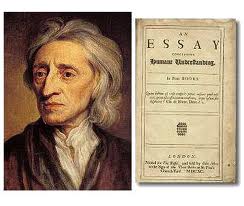
John Locke is the “father” of property rights theory, and continues to be referenced in defense of private property. In the second volume of his Two Treatises of Government, Locke specified the conditions that must be satisfied in order for property to be deemed legitimate. Initially, any property taken from “the commons” (public or collective property) had to be based on one’s labor that was expended to improve that property. (While Locke focused on landed property, his argument applies more generally.)
Continue reading

One Simple Measure That Would Save Social Security and More

By Joe Firestone
(Cross posted at Correntewire.com)

The Fiscal Times is a digital rag funded by Peter G. Peterson to propagandize the ideology of neoliberal austerity. Today, a Post by Josh Boak highlighted the proposal of “fixing” Social Security by lifting the cap Continue reading

Part 2 – Is an Anti-Austerity Alliance of Left Neo-classicals and Post-Keynesians Possible? Is it Desirable?

By Michael Hoexter

Points of Agreement and Division (con’t)

United as they are in their critique of neoclassical economics, it would be a mistake to portray post-Keynesians as united among themselves, a further complication for the emergence of any unified message from anti-austerity economists.  Continue reading