

Bank Whistleblowers United
Posts Related to BWU
Recommended Reading
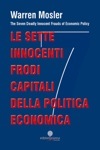
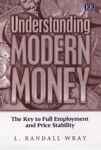
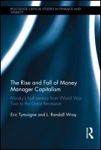
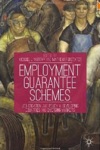
Click images to view details

Subscribe
Articles Written By
Categories
Archives
September 2026 M T W T F S S 1 2 3 4 5 6 7 8 9 10 11 12 13 14 15 16 17 18 19 20 21 22 23 24 25 26 27 28 29 30 Blogroll
- 3Spoken
- Angry Bear
- Bill Mitchell – billy blog
- Corrente
- Counterpunch: Tells the Facts, Names the Names
- Credit Writedowns
- Dollar Monopoly
- Econbrowser
- Economix
- Felix Salmon
- heteconomist.com
- interfluidity
- It's the People's Money
- Michael Hudson
- Mike Norman Economics
- Mish's Global Economic Trend Analysis
- MMT Bulgaria
- MMT In Canada
- Modern Money Mechanics
- Naked Capitalism
- Nouriel Roubini's Global EconoMonitor
- Paul Kedrosky's Infectious Greed
- Paul Krugman
- rete mmt
- The Big Picture
- The Center of the Universe
- The Future of Finance
- Un Cafelito a las Once
- Winterspeak
Resources
Useful Links
- Bureau of Economic Analysis
- Center on Budget and Policy Priorities
- Central Bank Research Hub, BIS
- Economic Indicators Calendar
- FedViews
- Financial Market Indices
- Fiscal Sustainability Teach-In
- FRASER
- How Economic Inequality Harms Societies
- International Post Keynesian Conference
- Izabella Kaminska @ FT Alphaville
- NBER Information on Recessions and Recoveries
- NBER: Economic Indicators and Releases
- Recovery.gov
- The Centre of Full Employment and Equity
- The Congressional Budget Office
- The Global Macro Edge
- USA Spending
-
The Mixed Economy Manifesto – Part 5 (of 5)
By Michael F. Hoexter, Ph.D.
[Part 1 is posted here; Part 2 is posted here; Part 3 is posted here; Part 4 is posted here]
Principles of Mixed Economies and Their Study
The challenge goes out to all of those who claim to know something about the macro-economy and society more generally to refute, dispute, modify or amend these principles listed below. Additionally, after public discussion, having arrived at a perhaps-truer version that accords with the evidence, to go on and challenge in their professional and everyday lives unreal and dysfunctional beliefs about how our economies and human civilizations actually work. Continue reading
Share this:
Posted in Michael Hoexter
The Mixed Economy Manifesto – Part 4
By Michael Hoexter, Ph.D.
[Part 1 is posted here; Part 2 is posted here; Part 3 is posted here]
The Anti-Keynes Revolt
Against the Keynesian consensus of the WWII era and afterwards, there remained marginalized economic schools that held to ideal notions about markets and remained convinced that a reliance on government was tantamount to a “Road to Serfdom” and ultimately led to Communism. The core of the neoliberal campaign, gathered around the Mt. Pelerin Society founded by economist/social philosopher Friedrich von Hayek, denied that government management of capitalism’s excesses was needed and that the price system and the market were pure, self-regulating entities which bring maximum prosperity and liberate the individual. Continue reading
Share this:
Brad DeLong: We’re All Minskians Now!
By L. Randall Wray
(Cross-posted from Great Leap Forward)
Earlier this week I noted, tongue-firmly-in-cheek, that we’re all MMTers now, following Paul McCulley’s recommendation that we just declare victory. And be nice about it.
Well here is a strange post from Brad DeLong: He proclaims that essentially anyone who is anyone is a Minskian. And apparently always was. That is why mainstream economists like “Paul Krugman, Paul Romer, Gary Gorton, Carmen Reinhart, Ken Rogoff, Raghuram Rajan, Larry Summers, Barry Eichengreen, Olivier Blanchard, and their peers” ought to be trusted. Continue reading
Share this:
Posted in L. Randall Wray
Tagged brad delong, Great Financial Crisis, Hyman P. Minsky, Steeve Keen
How Chief Justice Rube Goldberg Saved the Individual Mandate
By Dan Kervick
Imagine that the US Congress someday decides that as a matter of national security it is imperative for each American adult to be in possession of a smartphone. (Perhaps they believe that we might all need to receive an important text message from Homeland Security in the event of a major terrorist attack.) Suppose also that at the time of this decision there are 100 million American adults still without smartphones, and that the average smartphone costs $200.
According to the Supreme Court of the United States, here is a procedure Congress is permitted to follow:
Share this:
Posted in Uncategorized
What Should Brazilian Economists and Policy Makers have Learned from the Crisis?
By Daniel Negreiros Conceição
A global economic winter is coming. The Euro experiment is nearing its total collapse—an entirely avoidable disaster long foretold by MMTheorists. In the US, people’s blind aversion to public deficits and the public debt, fuelled by the alarmist cries of a Republican Party currently controlled by lunatics and economic illiterates, makes it impossible for the government to make use of the stimulating fiscal instruments that are needed to get that country out of its current recession. Even China, the one country that had been seemingly unaffected by the global depression until now, shows signs of slowing down. Brazil better be prepared.
Share this:
Posted in Uncategorized
The Mixed Economy Manifesto – Part 3
By Michael Hoexter, Ph.D.
Mr. Smith’s Unattainable Ideal
Another cause for this polarized view (of capitalism) has been the separation of the study of the functions of the state from the study of the economy, with the eclipse of the older discipline “political economy” of the 18th and 19th Centuries by a supposedly value-free “economics”. Economists, thinking they were isolating the essence of a politics-independent economy, gravitated throughout the 20th Century towards greater mathematization and abstraction. Markets, a copious supplier of often indecipherable numbers, became the raw material for formal models that had little to do with the actual economy. Non-mathematical methods to study politics and social institutions and economically-relevant cultural practices became uninteresting to economists. As a general tendency, economists also became more and more ignorant of the real world around them and almost completely unconscious of the effects of their theorizing on that world, making them ideal candidates to become “useful idiots” for powerful economic interests.
Share this:
Posted in Uncategorized
To Save the Euro, the Eurozone Governments Must Stand By Greece
By Marshall Auerback
George Soros probably understands the nature of the immediate problem facing the Eurozone (namely, the accelerating bank run which, amongst other things, potentially exposes Germany to trillions of contingent euro liabilities). But even Soros reflects the prevailing – and mistaken – view that Greece might need to become the sacrificial lamb required to save the euro. He said as much in a recent interview in Der Spiegel. Questioned about his proposal to rescue the European Monetary Union via a Debt Reduction Fund, Soros was asked whether this measure could also save Greece.
Share this:
Posted in Uncategorized
MMP #52 Conclusion: The Nature of Money
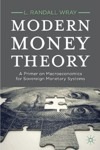
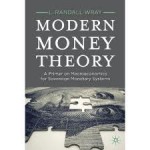 The Primer has run its course. I did not get to cover quite all of the topics I had planned. However, for those of you who want the whole Primer can read The Book: Modern Money Theory: A Primer on Macroeconomics for Sovereign Monetary Systems. Pre-order your copy here.
As the marketers say, if you liked the Blog, you’ll love the Book. As we went along with the blogs, I tweaked the manuscript. I incorporated a Q&A section following many of the chapters, taking account of your responses. I added topics that seemed to interest you, but that I did not have time to address in the blog. It also has an index and bibliography. And I changed the order substantially in order to make the argument more coherent. The book is in printing now so I expect you can get it by August.
This week we will wrap up with a discussion of the “nature of money”. Really that is what we’ve been getting at for approximately 52 weeks. I think this is what distinguishes what we do here at NEP from other bloggers who understand much of the basics. It is not just that a sovereign government faces no financing constraint, other than constraints it self-imposes. It is not just that bond sales are a reserve drain. It is not just that a JG provides a wage anchor. In my view, MMT is an approach that allows us to understand the nature of money in the sort of economy we find ourselves. And since money is the most important economic institution in our economy, we really cannot understand what our economic system is all about if we get money wrong.
Share this:
Posted in Uncategorized
The Mixed Economy Manifesto – Part 2
By Michael Hoexter
Neo-Social Darwinism and Neoliberalism
An ideological support to the rise of the neoliberal consensus in economics and politics has been an undercurrent of neo-social Darwinism in the social sciences and in social discourse more generally, which has gained a stronger role in political discourse since the beginning of the most recent economic crisis. Published in the mid-19th Century, a critical time in the genesis of the social sciences, Charles Darwin’s work proposed that biological reality was fundamentally based on differential advantages of individuals within a species, which in turn led to evolution of that species and differentiation of new species from pre-existing species. When applied to social species (social insects and human beings) that have come to be critical players in the world’s ecosystems, the exclusivity of focus on differentiation between individuals of a species over evolutionary time has been questioned by evolutionary biologist Edward Wilson. Wilson observes that social species’ commitment to survival of the group is an important in co-determinant in their individual evolutionary success.
Share this:
Posted in Uncategorized
