Knock-Knock.
Who’s there?
Money.


Posted in Stephanie Kelton
Tagged #PCS, #TDC, MMT, Modern Monetary Theory, Money. Trillion Dollar Coint
By Dan Kervick
I thought I would take a break from the latest outburst of debt ceiling mania to call attention once again to the bipartisan plan of budget austerity and recession-tempting economic devastation that will be implemented in March in one form or another, and from which the debt ceiling debate is designed to distract us.

Posted in Dan Kervick
The exception to the general pattern focusing on the Trillion Dollar Coin (TDC) as the solution to the debt ceiling problem I outlined and critiqued in my last post, is in Joe Wiesenthal ‘s posts here and here. Wiesenthal alone criticizes, rather than ignores, other options than the TDC, namely the $16 T and $100 T options, on grounds that they are no more effective at meeting the debt ceiling crisis than the TDC. He says that the issue is not a lack money but the debt ceiling law, and also that if a coin that large were minted and used to pay back the debt, then the result would be inflation or hyperinflation because of the flow of the large quantity of reserves into the economy, and the ensuing great expansion in the money supply. Continue reading
The New York Times’ web version ran a story this morning (January 8, 2013) entitled “Unemployment Continues to Climb in Euro Zone.”
Eurostat reports that Eurozone unemployment has reached the record rate of 11.7%, with 18.8 million unemployed (an increase of two million in a year). “[Y]outh unemployment continues to grow, with 5.8 million people under 25 classified as jobless in November, up 420,000 from a year earlier.” As youth unemployment surges it becomes common for college graduates in the periphery to emigrate. The article shows that Berlin’s insistence on inflicting austerity on Spain and Greece has forced them into Great Depression levels of unemployment. Italy’s level of youth unemployment is also at Great Depression levels.
Continue reading
William K. Black appears on al Jazeera discussing how safe the Basel III International Liquidity agreement truly are.
Comments Off on How Safe Is The New International Liquidity Agreement?
Posted in William K. Black
Tagged banksters, basel 3, Financial crisis, liquidity agreement
Among the many posts on the Trillion Dollar Coin (TDC) and Platinum Coin Seigniorage (PCS) we’re seeing this week, is a category of posts favoring using PCS in a limited way to avoid the debt ceiling crisis, rather than using it in a much more robust way, that would change the procedures underlying Federal spending, so that fiscal policies advocating austerity no longer have a political foundation in a visible and rising national debt that austerity advocates can constantly talk about fixing through “shared sacrifice.” Continue reading
By Dan Kervick
Brad DeLong worries that President Obama does not have a strategy to persuade Mitch McConnell and Senate Republicans to back down from their “crazy” threat on the debt ceiling and force them to accept a “real deal”:
I don’t see a strategy from Obama to convince Senator Mitch McConnell (R-KY) and the other debt-ceiling hostage-takers that Obama has a path for what happens after the debt ceiling is breached that he prefers to a real defusing deal.
DeLong’s description here is slightly confusing, because the debt ceiling has already been breached. It was breached six days ago, and Treasury Secretary Geithner has already informed Congress that the US Treasury is now taking a series of extraordinary accounting measures to continue making all of the government’s payments without increasing the nation’s total debt obligation. The estimate is that we have a couple of months before the government runs out of the kinds of accounting tricks that will enable the country to avoid defaulting on some its payment obligations without issuing debt above the current statutory limit. So I assume DeLong just misspoke here, and by “breaching the debt ceiling” he actually means “defaulting on payment obligations”.
Posted in Dan Kervick
By J. D. Alt
*A work of fiction
 The President appeared surprisingly upbeat and confident: He grasped the sides of the lectern—not as he often had in the recent past, as if to support and steady himself in moments of national turmoil—but rather as if he were about to lift it up and toss it aside. Adjusting his papers, he quickly made eye-contact with each reporter in the front rows, usually with a quick nod of greeting, but sometimes with a stern hesitation. Continue reading
Posted in J. D. Alt
Tagged fiat currency, MMT, Modern Monetary Theory, sovereign currency
By William K. Black
(Cross posted at Benzinga.com)
Alvaro Vargas Llosa (AVL) co-authored the Guide to the Perfect Latin American Idiot with two other journalists. He revisited the subject with an article in 2007 entitled “The Return of the Idiot.”
“The ‘Idiot’ species, we suggested, bore responsibility for Latin America’s underdevelopment. Its beliefs — revolution, economic nationalism, hatred of the United States, faith in the government as an agent of social justice, a passion for strongman rule over the rule of law — derived, in our opinion, from an inferiority complex. In the late 1990s, it seemed as if the Idiot were finally retreating. But the retreat was short lived. Today, the species is back in force in the form of populist heads of state who are reenacting the failed policies of the past, opinion leaders from around the world who are lending new credence to them, and supporters who are giving new life to ideas that seemed extinct.” Continue reading
Posted in William K. Black
Tagged CATO institute, ecuador, emigration, Iceland, ireland, latin america, neoliberalism, Portugal, spain
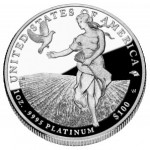 Enthusiasm for using Platinum Coin Seigniorage (PCS) to produce a Trillion Dollar Coin, or coins totaling a few trillion dollars continues to increase. The twitterverse went mad two nights ago around #mintthecoin, a hashtag originated by MMT’s Stephanie Kelton, which by yesterday morning had become the 5th most highly trending topic on twitter.
Meanwhile, the blogosphere continued to produce more points of view on the Platinum Coin. The points of view divide into those that are very negative; either claiming that 1) using Platinum Coins would be illegal or unconstitutional, or 2) using them would be just ridiculous and financially irresponsible, and so should be avoided; and others that favor using PCS 3) either in a limited way to avoid the debt ceiling crisis, or 4) in a much more robust way, that would change the procedures underlying Federal spending, so that fiscal policies advocating austerity no longer have a political foundation in a visible and rising national debt that austerity advocates can constantly talk about fixing through “shared sacrifice.” In this post I’ll review new posts on legality and constitutionality. Continue reading
Click images to view details