(Re) Occupy Greece

By William K. Black
(Cross-posted from Benzinga.com)

While the Occupy Wall Street (OWS) movement set its sights on occupying a financial center, Germany has accomplished the vastly more impressive feat of occupying an entire nation – Greece.  Germany has experience at occupying Greece having done so during World War II.  The art of occupying another nation is to recruit a local puppet to do the dirty work required to repress the citizens.  Germany used several puppets, most notoriously the murderous Ioannis Rallis, to (nominally) rule Greece and terrify the Greek people during World War II.  (After Germany’s defeat, Rallis was executed for his treason.)

Continue reading

William K Black’s Testimony Before the Senate Judiciary Committee

The full hearing can be viewed here.  Prof. Black’s testimony starts around the 144th minute.

The Public Money Monopoly (Pt. II)

By Dan Kervick

In Part One of this essay I defended the MMT view that the national government is the monopoly issuer of the currency in the US, and I attempted to clarify the actual economic status of that government currency with respect to the Fed’s conventional balance sheet accounting.   In this concluding part of the essay I will further develop the contrast between the government’s role as currency issuer and the role of private sector households and firms – including commercial banks – as currency users.  I will then make a few points about how the government supplies currency to the non-governmental sectors of the economy before concluding with a discussion of several topics that tend to engender resistance to the very idea that such a currency monopoly exists.

Continue reading

The Public Money Monopoly (Pt. I)

By Dan Kervick

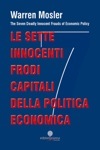
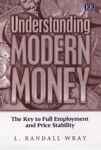
Modern Monetary Theory (MMT) emphasizes the central role of governments in sovereign monetary systems.  MMT co-developer Warren Mosler has described the US dollar system, for example, as a “simple public monopoly.”    L. Randall Wray has written that, “In the United States, the dollar is our state money of account and high-powered money (HPM or coins, green paper money, and bank reserves) is our state monopolized currency.”   Sometimes this crucial MMT claim is expressed more broadly by saying the US government is the monopoly supplier of “net financial assets” to the non-governmental sectors of the dollar economy.

Continue reading

William K. Black: 2nd ‘German Occupation of Greece?

Microcredit Accounting Control Fraud Deepens Bosnia’s Nightmare

By William K. Black

I write to recommend reading David Roodman’s recent column in the Washington Post (“Microcredit doesn’t end poverty, despite all the hype”).

Microcredit has been the fair-haired child in economic development despite very weak evidence that it was successful in reducing (much less “end[ing]”) poverty.  It has been praised by liberals, conservatives, and feminists – an odd but strong coalition.  Roodman explains that providing credit to poor people does not necessarily increase growth and reduce poverty.  Roodman notes that providing large amounts of microcredit can produce bubbles.  He notes that Bosnia is one of the nations that have experienced this problem, but does not note the critical article on the Bosnian microfinance crisis and he fails to mention the five-letter “f” word – fraud.  Doing so would greatly strengthen his argument and demonstrate that badly designed microcredit can spur control fraud, bubbles, financial crises, recessions, and increased poverty.  Roodman was writing a brief, general article about microfinance.  A longer article about Bosnia’s microcredit nightmare is a good complement to his piece and I urge reading both articles in full.

Continue reading

MMT for Austrians Part 4: Is Description Without Theory, Ideology or Policy Desirable? Is it Even Possible?

By L. Randall Wray

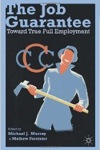
This will be the final part of this series. Next week we turn to the Job Guarantee/Employer of Last Resort.

The answer to both questions posed in the title is, I think, a big fat no.

I’m not going to go deeply into methodological debates. First, I’m no methodologist. Second I don’t think many readers here are that interested in such debates. And, third, it really isn’t necessary.

Continue reading

New Look and Big Things to Come

Thanks to the efforts of Mitch Green, New Economic Perspectives has a fresh new look with features and extras that we hope will make this an even more exciting place to visit.  It isn’t easy. We don’t allow advertising on the NEP site, and we have no operating budget. We do what we do because we find it rewarding.  How else could we have “conversations”- in real time – with strangers sitting at computers all over the globe?  And while we’ve made great strides since the blog was launched in the summer of 2009 — NEP is ranked among the top twenty economics blogs in the world — we want to do more.

Our readers have asked for more multimedia content (YouTube lectures, animated videos, whiteboard presentations, etc.). We think these are great ideas!  With your help, we plan to create a library of essential resources for you to view and share as you wish.  If you agree that these are worthwhile goals, please make a financial contribution using the “Donate” button today.

Is Greece’s Rescue at Hand?

Marshall Auerback’s latest assessment of the ongoing Greek crisis.  Watch here.

BLOG #39 DISAGREEMENTS AMONG REASONABLE PEOPLE: RESPONSE TO MMT FOR AUSTRIANS #3


This week we continued our (unplanned) extension of commentary on Austrian economics. The post was featured on the home page of NEP as well as on the MMP. A large number of comments were provided, although few questions or comments that really needed response. There is no doubt that Austrian economics always provokes response—by lovers and haters. There is almost no in-between.