The Trillion Dollar Coin Is A Conservative Meme

By Joe Firestone

The Trillion Dollar Coin (TDC) is, first, an oversimplified meme, because there’s not one TDC solution, but lots of Platinum Coin Seigniorage (PCS) variations on that idea with differing implications for politics. Some just kick the can down the road, until the next debt ceiling crisis, or set up another trade between the Administration of something relatively valuable for something less valuable. Others would really change the political game. Continue reading


What Does The Trillion Dollar Coin Do?

By Joe Firestone

The Trillion Dollar Coin proposal for solving the debt ceiling problem is again experiencing a blogosphere explosion this past week. The precipitating factor may be that people are starting to believe that the Republicans will come to a “fiscal cliff” settlement with the Democrats including very little in entitlement spending; but will then come back, in 2013 with a very tough position on the price they want to agree to raise the debt ceiling to give the Executive operating room for any length of time. Bruce Bartlett had this to say on the issue: Continue reading

Origin and Early History of Platinum Coin Seigniorage In the Blogosphere

By Joe Firestone

[Revised 1/6/2013]

This post records the history of platinum coin seigniorage in the blogosphere through the debt ceiling agreement on August 2, 2011. Its purpose is to correct errors in the record about the history of this idea appearing on mainstream blog posts by Joe Wiesenthal, John Carney, and Brad Plumer, during the past week. The idea of using coin seigniorage, the profits made from minting proof platinum coins,  depositing them at the Fed, and receiving electronic credits in return, to remove the need for issuing debt, and so to always stay under the debt ceiling is due to a  commenter (and occasional blogger) on economics and politics blogs whose screen name is beowulf (Carlos Mucha). Beowulf’s first comment on Platinum Coin Seigniorage (PCS) was on Brad Delong’s site on July 6, 2010 (h/t Cullen Roche, 01/05/13). But, the first comment of his I noticed on PCS was at New Deal 2.0. Unfortunately, when The Roosevelt Institute redid its New Deal 2.0 site, it wiped out the record of beo’s comment. However, I quoted his ND 2.0 proposal in a post on November 12, 2010 discussing a possible Government shutdown due to the debt ceiling. I cross-posted this at Correntewire too where beowulf commented further on the platinum coin option.

Continue reading

Virtually Speaking and Bill Black

NEP’s William Black appears on Virtually Speaking with host Jay Ackroyd (12/6). (Bill’s interview begins around the 12 minute mark)

Paying for Lunch – MMT Style

By Dan Kervick

A common criticism of Modern Monetary Theory is that it is a naïve doctrine of free lunches.  The critics grant that a country like the United States, which issues its own freely floating fiat currency, can always make the policy choice to issue whatever quantity of that currency it deems appropriate.  The US government can spend as many dollars into the private sector economy as it chooses, without obtaining those dollars from some other source first, and it can always pay any debts that have been incurred by borrowing dollars.  But the critics will go on to charge that MMT mistakenly concludes from these few institutional and operational facts that there are no economic limits to the wealth-generating capacities of the government.  They caricature MMT as a doctrine of manna from heaven, in which the power of issuing a generally accepted medium of exchange confers the power of conjuring real wealth into existence by prestidigitation.   In short, they see MMT as a disordered syndrome characterizing people who are experiencing massive money illusion.

Continue reading

NEP Stands with Correntewire

By Stephanie Kelton

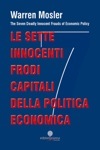
Our friend Lambert Strether is having a fundraiser and we at NEP want to support him the way he supported us more than three years ago.  We hadn’t met before, but Lambert wrote to ask if we would come to Washington, DC as an antidote to the “fiscal sustainability teach-in” that Peter G. Peterson was hosting. We agreed, and Lambert set about raising money and interest in the event.  Warren Mosler, Bill Mitchell, Randy Wray, Pavlina Tcherneva and I all participated.

Correntwire was also one of the very few places where the Proof Platinum Coin concept took root and sprouted.  He’s a tireless advocate who deserves our thanks.

If you support MMT, then please consider helping out someone who has done so much to help us over the years.  Click here to help.

Note to Italy: Please send us more Saracenos

By William K. Black
(Cross posted at Benzinga.com)

I began writing this article while returning from presenting at a conference on Modern Monetary Theory (MMT) in Reggio di Calabria, Italy arranged by Francesco Toscano and supported by the Regione Calabria and the Provincia di Reggio Calabria.  MMT has sparked considerable interest in Italy because it puts the lie to the constant claim that there is no alternative (TINA) to austerity and deepening recessions in the Eurozone. Continue reading

A Meme For Money, Part 4: The Alternative Tax Meme

By L. Randall Wray

Let us continue to develop an alternative frame for money. As you know, MMT says that “taxes drive money”. Let’s develop that further.

According to the orthodox meme, taxes are bad—the far right views them as outright theft—so the lower they are, the better. Most view taxes as necessary to “pay for” government spending, but again since in the conservative framing, government does next to nothing that is useful this represents a redistribution from productive, private, use to public waste. Hence, again, it is best to keep taxes as low as possible to “starve the beast” and to keep the private sector humming along. Continue reading

Financial Crisis – Class Project

By Todd Drummond & Michael Flanigan

This is one of the projects completed for Dr. Kelton’s graduate macroeconomics course, Fall 2012.

A Meme for Money, Part 3: Framing the Alternative Approach

By L. Randall Wray

In Part 2 we looked at the mainstream framing of discussion about money and about the economy and society more generally. Following Lakoff, my argument is that framing is important and that so far orthodoxy is winning all of the important policy debates because it has the better framing. Policy is always and everywhere a moral issue—not merely an economic issue and certainly not a technical issue. To win policy debates, we must—like orthodoxy—engage the moral issues. We can take the higher moral ground. Continue reading