How to Regulate Mortgage Lending, Part 1

By William K. Black

(cross-posted with Benzinga.com)

“Regulating” and “deregulating” are terms that often mislead. My next three columns discuss how to regulate two diverse activities that are critical to our economy – residential mortgage lending and starting small businesses. This column explains the most regulatory approaches essential to regulate residential mortgage lending effectively. Next week’s column will discuss why the regulatory approach we have taken and the modifications to that approach contained in Basel III do not provide an inherently unsound regulatory structure. The third column will deal with regulatory structures that aid small business formation.

Regulating Residential Mortgage Lending: Introduction

Effective regulation must begin with the rationales for regulating the activity. The failure to take this approach was critical to the crisis we have just experienced. One of the great failures was assuming that if the lender was not federally insured there was no need for federal regulation. That assumption, in turn, was based on assumptions about the type of institution requiring deposit insurance. Both of those assumptions are large topics with voluminous literatures that will be the subject of future columns. For purposes of this column I assume that we have decided that the federal government should regulate residential mortgage lenders. Most of the principles I discuss also apply to commercial real estate (CRE) lending (which includes loans to build more than four residential units), but CRE has some unique characteristics that warrant a separate column.

This column focuses on safety and soundness regulation as opposed to compliance, but I emphasize that effective enforcement of rules to protect borrowers would have prevented trillions in dollars in losses to lenders. Indeed, that example exemplifies my central point – effective regulation is essential and desirable to protect honest lenders. That does not mean that all regulation is desirable or that more regulation is better than less regulation.

Our central function as financial regulators is to reduce criminogenic environments and prevent epidemics of accounting control fraud. Home mortgage lending is an industry that we know how to do well. Historically, credit losses on home loans – from all sources – have been under one percent. That means that residential mortgage lenders have long understood how to limit fraud losses to well under one percent. The good news is that the same rules that dramatically limit losses from imprudent loans are exceptionally effective in preventing fraud.

U.S. home lenders suffer severe losses in three circumstances: due to sharp, sustained increases in interest rates, accounting control fraud, or the collapse of hyper-inflated residential real estate bubbles. Foreign banks can also suffer severe losses due to currency risk. U.S. mortgage loans are made in U.S. dollars and borrowers’ salaries are overwhelmingly paid in dollars, so this column does not address how regulators should respond to currency risk.

Uncompetitive Lenders

Home lenders can also fail due to poor cost controls relative to their competitors, but these failures do not cause serious losses and do not pose systemic risks. These failures also typically require several years to occur and are simple for the regulators to spot through routine reviews of the banks’ “call reports.” We send examiners in to confirm the reasons the lender’s general and administrative expenses make it uncompetitive, but the problem is almost always weak managerial skills. We try to convince the bank to hire new managers or find an acquirer before the failure. Our great advantage as regulators over other entities that are supposed to correct such problems, e.g., the board of directors or the outside auditor, is that we can be truly independent. The board of directors was picked by the CEO and signed off on the business strategy that is leading the bank toward failure. The audit partner fears that he will lose the client if he gives a negative audit opinion. It is not the auditor’s function to serve as a business consultant. Good regulators can help in this sphere, but this is not the sphere in which we must show great courage and it is not the sphere in which we can prevent hundreds of billions of dollars in losses, Great Recessions, and the loss of over 10 million jobs.

Systemically Dangerous Institutions (SDIs)

The important exception to this conclusion is that courageous regulatory intervention is essential where the banks’ failures to be competitive is caused by market power and implicit federal subsidies to banks deemed “too big to fail.” Systemically dangerous institutions (SDIs) are far less efficient than their competitors, but they can obtain decisive advantages over smaller competitors because of their ability to borrow more cheaply. That competitive advantage arises in some regions from their market power, which allows them to raise deposits at lower interest rates. Because they are perceived as “too big to fail” they, SDIs are the beneficiaries of an implicit federal subsidy that allows them to borrow other funds more cheaply than smaller competitors. I’ll deal with the necessary regulatory steps to rid us of the SDIs, which are inefficient and dangerous, in future columns. The Bush and Obama administration policies toward the SDIs have made them far larger, substantially increased their market power, and increased the systemic risks they pose.

Interest Rate Risk

Interest rate risk can also pose systemic risks. There is no reason for a home mortgage lender to take large interest rate risks in the modern era. They can transfer the risk either by selling the home loans (and hedging the pipeline) or keeping the home loans in portfolio and hedging the risk. There is no societal advantage to mortgage lenders taking substantial interest rate risk (the expected value of taking interest rate risk should be zero). The Special Investment Vehicles (SIVs) that the huge investment and commercial banks created to hide their sister banks’ true debts added exceptional interest rate risk to their overwhelming operational (control fraud) risk. The Regulators, therefore, should not allow lenders or their affiliates to take substantial interest rate risk and should not allow bank holding companies to create SIVs. SIVs create substantial systemic risk and make finance opaque. From society’s standpoint, SIVs are unambiguously harmful.

Identifying, measuring, and controlling the interest rate risk of a portfolio of American mortgages is a particularly complex process because of the embedded prepayment option and the lack of prepayment penalties. Hedge accounting is notorious for its abuses. The SEC charged that Fannie’s controlling officer abused hedge accounting to inflate reported earnings to maximize their bonuses and that Freddie’s controlling officer manipulated hedge accounting to create “cookie jar” reserves that they could draw on whenever desirable to maximize their future bonuses. Many purported “hedges” are actually designed to prevent loss recognition and involve speculative investments that increase interest rate risk. The banking regulators and the SEC can improve their chances of detecting these scams by having the examiners (with appropriate accounting support) check to ensure that the lender is keeping contemporaneous records documenting that the purported hedging instrument was actually purchased to hedge a specific position and that the bank had demonstrated and documented that the instrument would function as an effective hedge. This discussion illustrates one of the essential facts about effective financial regulation – enforcing honest accounting is a prerequisite.

“Dynamic hedging” is an oxymoron that is subject to even worse abuses than conventional hedges. Dynamic hedging cannot protect against large changes in interest rates (which are the changes we most need to worry about as regulators) and can cause a severe systemic risk that can drive market crashes. Regulators, therefore, should prohibit “dynamic hedging.”

The good news about regulating interest rate risk is that if the regulators do ban dynamic hedging, ensure accurate records of real hedges, and forbid banks from taking substantial interest rate risk then it is very difficult for a bank to take large gambles on interest rates. There is no societal benefit to banks taking substantial interest rate risk in the modern era. An honest, competent bank would not take serious interest rate risk and purport to use dynamic hedging to neutralize that risk. An honest, competent bank would test and document its hedges. Honest, competent banks would do all these things even if there were no regulators. Bankers, not regulators, devised these business practices because they are essential to running a prudent bank that can prosper and survive.

This discussion of the procedures that competent banks would follow in the absence of banking regulation also illustrates why studies purporting to show immense compliance costs to banking regulators are false. Most of these costs falsely classified as costs of regulation would be borne by banks regardless of whether the regulator existed. Other costs, such as creating the call reports, are costs of regulation, but they are of great value to the banks. Absent the regulatory requirement to provide the data and the role of government examiners and data specialists in keeping the data more comprehensive, comparable, and accurate the banks would have to pay a private sector entity to create an inferior industry data system, likely at greater cost.

Banks that are exposed only to modest interest rate risk take a long time to fail even if interest rates increase sharply. America, relative to other nations, has had low interest rate volatility. This means that American banking regulators have typically had ample forewarning of problems arising from interest rate risk. Losses due to interest rate changes have not driven modern American bank failures.

Regulating to Prevent and Limit Accounting Control Fraud Epidemics

Epidemics of accounting control fraud have driven our two most recent U.S. financial crises (the S&L debacle and the current crisis as well as the Enron era frauds). The national commission that investigated the causes of the S&L debacle reported that at “the typical large failure” “fraud” was “invariably present.” (The S&L debacle was a tragedy in two acts. The first act was driven by interest rate risk and it caused serious losses. The second act, which proved roughly five times more expensive than ultimate losses from interest rate volatility, was driven by the accounting control frauds.)

The current U.S. crisis was driven by far more extensive mortgage fraud led by the large nonprime specialty lenders. The incidence of fraud was so great that it hyper-inflated the largest financial bubble in history.

The Recipe for Fraudulent Lenders Cooking the Books

Accounting control fraud is so dangerous because it simultaneously attacks the greatest weaknesses of the private and public sectors. To see why we have to reprise the four-part recipe for lenders maximizing (fictional) short-term income:

1. Grow extremely rapidly

2. By making high yield loans to those who will often be unable to repay

3. While employing extreme leverage

4. And providing only grossly inadequate loss reserves (ALLL)

As Akerlof & Romer stressed in their 1993 article, accounting control fraud is a “sure thing.” They entitled their article – Looting: the Economic Underworld of Bankruptcy for Profit in order to emphasize that the same fraud scheme that produced huge (fictional) income maximized real losses and was a leading cause of bank failures. The fictional income also made exceptional compensation to the bank’s officers a sure thing. The lender fails (in the era in which Akerlof & Romer wrote – we now often bail out the frauds and leave their managers in charge), but the controlling officers walk away wealthy.

The recipe makes individual control frauds into wealth destroying monsters that cause extraordinarily large losses to banks. That alone makes preventing and closing rapidly accounting control frauds our top regulatory priority. Unfortunately, epidemics of accounting control fraud are not rare, and such epidemics create perverse dynamics that cause vastly greater losses. I discuss the risks of such epidemics in greater detail below.

The central problem is that accounting control frauds look wonderful to the public sector and inexperienced and ideological anti-regulators. Theoclassical economists assured regulators that lenders and shareholders’ “private market discipline” makes accounting control frauds impossible. In reality, many lenders and shareholders rush to lend to and invest in banks reporting record profits – and the accounting control fraud recipe guarantees record (albeit fictional) profits in the near-term. The result is that creditors and shareholders lend and invest the cash that funds the fraudulent banks’ exceptional growth.

Theoclassical economists also assured regulators that independent experts, particularly top tier audit firms, would never give favorable opinions to fraudulent corporations. Law students were taught in their “law and economics” classes that they could safely rely on the auditor’s opinion. In reality, the CEOs leading the largest accounting control frauds routinely hire top tier audit firms and consistently receive clean opinions blessing their fraudulent financial statements. The art of accounting control fraud is to suborn – not defeat – the internal and external “controls” and turn them into the most valuable fraud allies. The frauds use the auditors, appraisers, and rating agencies’ reputation and seeming expertise to assist them in deceiving their investors, lenders, and regulators. Indeed, the CEO uses the initial expert’s opinion, e.g., the appraiser, to assist him in suborning the next expert in the chain, e.g., the auditor.

Regulators that rely on reported income, net worth, and losses are worse than useless against accounting control frauds. Unfortunately, that has become the norm in the financial regulatory world and the basis for the entire Basel process. It is an approach that cannot succeed. Accounting entries are subject to massive manipulation. It is common for the banks reporting the greatest profits to be massively insolvent. Standard econometric studies, during the expansion phase of a bubble or in the presence of accounting control fraud, produce systematically biased results that support the worst possible regulatory policies that optimize the criminogenic environment that attracts and optimizes the frauds.

Control Frauds Epidemics can Cause “Echo” Epidemics of Fraud

Fraud begets fraud. The CEOs who control the lenders engaged in accounting control fraud deliberately create the perverse incentives that generate other frauds to aid their looting. Consider four examples of “echo” epidemics of fraud that produced the current crisis:

• They generate endemic internal and external frauds by employing “liar’s” loans

• They generate endemic internal and external frauds by compensating their loan officers based on loan volume rather than loan quality

• They generate endemic fraud by independent experts by creating a “Gresham’s” dynamic. For example, lenders engaged in accounting control fraud may refuse to use appraisers who refuse to inflate the market value of the house. The lenders engaged in control fraud leak to the appraiser the loan amount so that the appraiser will know how high the market value of the home must be inflated.

• They created a network of fraudulent suppliers of fraudulent mortgage loans by creating the perverse incentives that made fraudulent loan brokers the eager suppliers of fraudulent mortgage applications. The CEOs controlling the fraudulent lenders frequently optimized this echo epidemic by employing liar’s loans and degrading their underwriting process so that it would approve tens of thousands of fraudulent loans.

Echo fraud epidemics occur because the private sector is so responsive to financial incentives – including perverse financial incentives. A Gresham’s dynamic does not have to corrupt everyone to be fully effective in the contexts discussed above. The CEO of the fraudulent lender or fraudulent loan broker only needs to suborn a small percentage of the appraisers and loan brokers to implement the first two ingredients in the accounting control fraud recipe. Private market discipline is exceptionally effective – in funding control frauds and generating echo fraud epidemics. The CEOs that controlled the lenders that created these perverse incentives knew full well that they would create endemic echo frauds. Their creation of an intensely criminogenic environment is sufficient to cause the echo epidemics of fraud.

The Real Job Killers? State Budget Crises

By June Carbone

I sit on the Faculty Senate of a large Midwestern university. Every meeting for the past year has been consumed with planning for this year’s budget crisis. For those insulated from Washington politics, the timing is curious. The economy is improving. State revenues are increasing. Yet this year will be the worst in over a decade for cuts to higher education, school teachers in the suburbs, police in crime-ridden cities, and bridge and infrastructure repair everywhere. Virtually every state will be affected. The cumulative impact will worsen unemployment and may be enough to trigger the feared double dip recession, touching off a new round of economic misery.

In this context, Congressional debate of the misnamed “Repealing the Job Killing Health Care Act” is a tragic distraction from the immediate source of job losses — the rejection of the economic lessons that have kept the economy on track since the Great Depression. As Paul Krugman explained in his critique of the euro in this week’s New York Times Magazine, national fiscal policy and state spending are fundamentally different, whether in Europe or the U.S. Spending at the national level includes automatic correctives. Run federal deficits too high for too long, the dollar falls, imports become more expensive and the demand for American goods increases.

States, however, cannot print money and they are rightly subject to balanced budget provisions that require that they slash expenses when revenues fall. Economists have accordingly maintained since the New Deal that federal spending should be counter-cyclical — a recession is the time to spend money to create jobs. Policy makers since Richard Nixon have further argued that much of the counter-cyclical spending should go to the states; they are closer to people’s needs and more directly hurt by falling revenues. So if the concern is jobs, counter-cyclical federal spending implemented through a Republican idea — revenue sharing — should be the new Congress’ first priority. It would forestall the job slashing taking place in statehouses throughout the country and do more to reduce unemployment than any proposal currently on the table.

Yet no one is talking about revenue sharing. President Obama proposed some aid to the states as part of his original stimulus package, but Republicans pared those measures back in favor of tax cuts that contributed less to job preservation. When the Republicans insisted on running up the deficit through tax cuts for the wealthy, the president responded with more tax cuts for everyone else — but not the spending most directly tied to jobs. The bailout of financial fat cats lasted long enough to bring back high corporate profits and rising stock market prices. Yet assistance to the states is being cut off at a time likely to forestall economic recovery.

The results reject the conventional economic wisdom of the last half century and inflict needless misery on the teachers, policemen, and construction workers who form the backbone of the country. While China undertakes massive public investment in schools, universities, technology, roads and a 21st century infrastructure, we are dismantling the institutions essential to our ability to compete. The token fight to repeal health care is a distraction from the job demolition derby underway in the states as a direct result of federal cutbacks. Yet the connection between ideologically driven federal policy and state layoffs does not even seem to merit notice in the scores of stories about layoffs, tuition increases and reduced crime protection. It is time to focus attention on the real job killers and hold them accountable.

June Carbone is the Edward A. Smith/Missouri Chair of Law, the Constitution and Society at the University of Missouri – Kansas City.

Cross-posted from New Deal 2.0 and the Huffington Post.

Obama Embraces the “Economic Philosophy That Has Completely Failed”

By William K. Black
(via the Huffington Post)

President Obama’s Executive Order on regulatory review was originally set in motion by his February 3, 2009 direction to OMB to create an improved regulatory review process.

The fundamental principles and structures governing contemporary regulatory review were set out in Executive Order 12866 of September 30, 1993. A great deal has been learned since that time. Far more is now known about regulation — not only about when it is justified, but also about what works and what does not. Far more is also known about the uses of a variety of regulatory tools such as warnings, disclosure requirements, public education, and economic incentives. Years of experience have also provided lessons about how to improve the process of regulatory review. In this time of fundamental transformation, that process–and the principles governing regulation in general — should be revisited.

September 30, 1993 is an interesting date. I was the deputy director of the National Commission on Financial Institution Reform, Recovery and Enforcement (NCFIRRE). We issued our report in July 1993 on the causes of the S&L debacle. Our report was based on an extensive investigation of what worked and what failed in regulation.

In particular, we found that the deregulation and desupervision created an environment in which at “the typical large failure” “fraud” was “invariably present.” By fall 1993, the Office of Thrift Supervision had learned the lessons and developed extremely effective rules, supervision, enforcement, and support for the criminal justice system. Congress passed the Prompt Corrective Action (PCA) law in 1991. The regulators had removed the abusive regulatory accounting rules designed to cover up the scale of the debacle. Administration officials had falsely used this cover up of losses through accounting gimmickry to claim that the S&L crisis had been “resolved” at no cost to the taxpayers. The PCA was based on the finding that such accounting cover ups and “forbearance” greatly increased the eventual cost to the taxpayers.

By fall 1993, a well-functioning partnership of the OTS and the Justice Department had produced over 1,000 felony convictions of “major” S&L frauds — it remains to this day the greatest success against elite criminals in history. The Justice Department and the OTS ensured that the prosecutions were prioritized properly by creating the “Top 100” list. The OTS (which was created in 1989) had brought over 1,000 serious enforcement actions. The OTS secured over $1 billion in settlements from top tier auditors and brought hundreds of successful civil actions against the elite frauds. The reregulatory effort was so successful that for the next 15 years every U.S. Treasury Secretary flew to Tokyo and urged Japan’s leaders to stop relying on dishonest accounting to cover up their main banks’ losses and to instead adopt the regulatory policies that prevented the S&L debacle from becoming a catastrophe.

By September 1993, the S&L regulators had written extensively of our research findings about the role of accounting control fraud in driving the crisis and the regulatory and accounting lessons we had learned. My papers, collectively roughly 500 pages, had been circulated among many finance economists. Our work explained why econometric studies produced exceptionally erroneous findings in the presence of accounting control fraud and financial bubbles. Three of the nation’s leading white-collar criminologists, Henry Pontell, Kitty Calavita, and Robert Tillman had published several journal articles on these same topics. George Akerlof and Paul Romer formally presented their paper on accounting control fraud — “Looting: the Economic Underworld of Bankruptcy for Profit” at the Brookings Conference on September 9, 1993 before many of the nation’s most prominent finance specialists.

The NCFIRRE report notes that key elements of the Reagan administration — particularly Treasury and OMB, actively opposed our vital reregulation of the S&L industry. That reregulation was essential to containing a raging epidemic of accounting control fraud in the mid-1980s. Only the fact that the Federal Home Loan Bank Board was an independent regulatory agency prevented OMB from blocking S&L reregulation.

President Obama is correct that white-collar criminologists and a few non-theoclassical economists have continued to add to the useful understanding of regulation since 1993. However, his 2009 direction to OMB is not candid. By September 1993, we not only knew how to regulate effectively — financial regulation was exceptionally effective — and employment and growth were surging. The perverse (Gresham’s) dynamics that the accounting control frauds had caused that destroyed wealth and jobs had been eliminated or minimized. Even the most elite frauds and their elite political allies were held accountable. Bank Board Chairman Gray led the successful reregulation in late 1983-mid-1987 over the intense opposition of the Reagan administration, a majority of the House of Representatives, Speaker Wright, and the five U.S. Senators that became known as the “Keating Five.” Paul Volcker was Gray’s sole powerful ally. Wright and the Keating Five intervened on behalf of the two worst control frauds in America. S&L regulators had their careers destroyed, but continued to buck the frauds and their political patrons and do their duty to the public.

In 1991-1992, the OTS’ West Region used its supervisory powers to squash a fast-developing trend among a number of California S&Ls to make “liar’s” loans. We recognized that such loans were inherently unsafe and unsound and frequently fraudulent. Our efforts were so effective that Long Beach Savings gave up its federal charter to escape our regulatory authority. It became a mortgage banker and rebranded itself as Ameriquest — the most notorious of the early non-federally regulated lenders specializing fraudulent and predatory nonprime loans.

What happened after September 1993 is that OMB and Treasury, in alliance with Fed Chairman Greenspan and Senator Gramm, lost the accurate understanding of why vigorous financial regulation is essential and how one makes regulation effective. OMB, Treasury, Greenspan, and Gramm adopted anti-regulatory policies that were intensely criminogenic. We had to reregulate without the benefits of the criminology studies by Pontell, Calavita and Tillman and Akerlof & Romer’s economic studies. The Clinton and Bush administrations had the advantage of all our research and our demonstration of which financial regulatory policies succeed and which fail. (They also had the benefit of the public administration scholars’ books and articles that studied used our reregulation and concluded that it was an exemplar of effective regulation.) Unfortunately, the “completely failed” economic dogma that the Clinton and Bush administrations, Greenspan and Bernanke, and Senator Gramm shared led them to ignore our successes and adopt anti-regulatory policies that were so perverse that they were intensely criminogenic.

The recent epidemics of accounting control fraud, the creation of the largest bubble in history, and the Great Recession could not have occurred if the Clinton and Bush administrations had actually learned a great deal about what works and what fails in regulation. The Clinton and Bush anti-regulatory policies created the “three des” — deregulation, desupervision, and de facto decriminalization. In late 2008, however, then-Senator Obama proclaimed that he had learned the correct regulatory “lessons” from the resulting economic collapse. From the Washington Post:

“John McCain has spent decades in Washington supporting financial institutions instead of their customers,” [Obama] told a crowd of about 2,100 at the Colorado School of Mines. “So let’s be clear: What we’ve seen the last few days is nothing less than the final verdict on an economic philosophy that has completely failed.”

Senator Obama was correct — the Clinton and Bush anti-regulatory policies were a catastrophic failure that permitted the epidemics of fraud that drove the Great Recession and the loss of over 10 million jobs. OMB was among the most virulent opponents of vigorous financial regulation because it has long been dominated by anti-regulatory economists embracing the “economic philosophy that has completely failed.” Bush selected financial regulatory leaders on the basis of the strength of their anti-regulatory zeal. President Obama was incorrect, therefore, in his February 3, 2009 directive to the OMB about the improved understanding of regulation. “Years of experience” have not taught the theoclassical economists “far more” “about what works and what does not” in regulation. The theoclassical economists know vastly less about effective regulation now than did OTS in 1993.

The University of Chicago economists that President Obama appointed to senior positions related to regulatory policy scorned financial regulation. Austan Goolsbee, now Chairman of the President’s Council of Economic Advisors poured scorn on those who warned of the urgent need to regulate nonprime loans. In a March 29, 2007 op-ed in the New York Times, Goolsbee derided those warning that nonprime loans were a “time bomb.”

This column shows why the reasoning and methodology that Goolsbee employed “completely failed” because it relied on anti-regulatory dogma rather than sound economics and white-collar criminology. The column also shows that Obama’s regulatory review policy embraces Goolsbee’s “completely failed” anti-regulatory dogma and methodology and ignores the sound findings and methodologies employed by successful regulators, economists, and white-collar criminologists. Obama is correct that white-collar criminologists and non-theoclassical economists have learned “far more” “about what works and what does not” in regulation. He is incorrect that his economic team has learned these “lessons.”

Goolsbee loves financial innovation and “consumer choice.” He began his defense of nonprime loans by decrying the “very old vein of suspicion against innovations in the mortgage market.” Goolsbee premised his argument upon the findings of an econometric study of home lending innovations. He argued:

These innovations mainly served to give people power to make their own decisions about housing, and they ended up being quite sensible with their newfound access to capital.

[T]he mortgage market has become more perfect, not more irresponsible. People tend to make good decisions about their own economic prospects.

Of course, basing loans on future earnings expectations is riskier than lending money to prime borrowers at 30-year fixed interest rates. That is why interest rates are higher for subprime borrowers and for big mortgages that require little money down. Sometimes the risks flop. Sometimes people even have to sell their properties because they cannot make the numbers work.

And do not forget that the vast majority of even subprime borrowers have been making their payments. Indeed, fewer than 15 percent of borrowers in this most risky group have even been delinquent on a payment, much less defaulted.

When contemplating ways to prevent excessive mortgages for the 13 percent of subprime borrowers whose loans go sour, regulators must be careful that they do not wreck the ability of the other 87 percent to obtain mortgages.

For be it ever so humble, there really is no place like home, even if it does come with a balloon payment mortgage.

It’s hard to get something more wrong than Goolsbee (and the economists that conducted the study he relied upon) got this wrong. Theoclassical economics assumes that market participants are rational, informed, and utility-maximizing. It follows that expanding choices is always the correct policy. Some individuals who find the new option desirable will take it and be better off. Individuals that can expect to be worse off if they select a new option will not select it. Anyone who criticizes relying on consumer choice is paternalistic and is demeaning less-affluent consumers’ decision-making skills. The econometric study he relies and topic he discusses are perfect foils to illustrate Goolsbee’s opposition to regulation.

The problem is that the study Goolsbee relied upon illustrates why fraud makes econometric studies fail. I have explained (and these explanations can be found in my 1993 NCFIRRE papers and Akerlof & Romer’s 1993 article) why accounting control fraud epidemics can hyper-inflate financial bubbles. Bubbles allow accounting control frauds to refinance bad loans and delay delinquencies and defaults. The regional real estate bubbles had begun bursting before Goolsbee wrote his op-ed — the delinquencies, defaults, and foreclosures lag the collapse of the bubble. A 13% delinquency rate would kill most subprime lenders, but the eventual default rate was likely to be far higher. Goolsbee ignores the loss to the consumer of purchasing a home with substantial negative equity.

Goolsbee stresses that many of the subprime borrowers are relatively poorer minorities. The predatory lenders that induced them to take out loans they could not repay created reverse Pareto optimality — both parties to the nonprime loans made in 2006 and 2007 typically suffered a serious financial loss. Nonprime loans in 2003-2007 hyper-inflated the bubble and the markets increasingly less efficient (not ever more “perfect”). When one considers the endemic mortgage fraud by lenders and their agents and resultant negative expected value of the transaction we see that the frauds also cause negative externalities to the public. The nonprime borrowers included some speculators, but the typical borrower was the prey and the typical nonprime borrower lost wealth.

The three key elements that Goolsbee relied upon to give the worst possible policy advice on how regulators should respond to the nonprime loans (do nothing, all is well, the lenders are making the nonprime borrowers friends) are (1) a presumption that financial innovation is good and that financial regulation is bad if it reduces innovation, (2) greater consumer choice is good and financial regulation is bad if it reduces choice (note the innovation increases choice), and (3) the scientific means of choosing between alternative regulatory policies is to rely on econometric studies. Obama’s Executive Order revising regulatory review policy enshrines each of these three elements even though Goolsbee demonstrated that they lead to the most destructive regulatory policies if control fraud or bubbles are present. Obama’s Wall Street Journal letter adopted this Republican talking point about “innovation.”

Sometimes, those rules have gotten out of balance, placing unreasonable burdens on business–burdens that have stifled innovation and have had a chilling effect on growth and jobs.

There are doubtless some contexts where this unsupported assertion could be true, e.g., the various bans on stem cell research, but in the financial context “innovation” frequently poses systemic risks, is devoid of social utility, and has no demonstrated advantage to anyone but the seller. Paul Volcker has made this point forcefully:

I hear about these wonderful innovations in the financial markets, and they sure as hell need a lot of innovation. I can tell you of two — credit-default swaps and collateralized debt obligations — which took us right to the brink of disaster. Were they wonderful innovations that we want to create more of?

You want boards of directors to be informed about all of these innovative new products and to understand them, but I do not know what boards of directors you are talking about. I have been on boards of directors, and the chance that they are going to understand these products that you are dishing out, or that you are going to want to explain it to them, quite frankly, is nil.

I mean: Wake up, gentlemen. I can only say that your response is inadequate. I wish that somebody would give me some shred of neutral evidence about the relationship between financial innovation recently and the growth of the economy, just one shred of information.

President Obama’s Wall Street Journal letter directed regulators not to interfere with consumer choice.

[C]reating a 21st-century regulatory system … means using disclosure as a tool to inform consumers of their choices, rather than restricting those choices.

We tried this “economic philosophy” and it “completely failed.” Goolsbee’s op-ed was typical of theoclassical dogma: regulations that restrict consumer choice are inherent illegitimate. The predatory lender pushing the loan that the borrower cannot repay is the borrower’s true friend. The regulator is the paternalistic bureaucrat. The FDIC tried to use disclosure plus consumer education to make this anti-regulatory dogma sound more attractive — and disclosure and consumer education failed to protect the nonprime borrowers.
Obama’s directive is a radical, dangerous assault on regulation and consumers. It would require us to get rid of “suitability” requirements — your 85 year old grandmother’s financial advisor could hand her a “disclosure” page explaining the risks investing in the mezzanine tranche of CDOs and proceed to advise her to put her entire savings in the CDOs. We could not ban “liar’s” loans.

We would have to get rid of many of the food and drug safety laws. We cannot “restrict” the consumer’s “choices.” The drug companies can hand out a “disclosure” page about the risks of a drug that has not been FDA approved for safety and efficacy and it’s up to you to decide whether to buy it. We cannot restrict the consumer’s “choice” so there cannot be any limits on usury or default fees. Your friendly payday lender can hand you their disclosure sheet and then when you are delinquent on a $50 loan they can charge you a $500 fee. We cannot restrict choice, so everybody you contract with can take away your right to sue for torts they commit by disclosing that they have a mandatory arbitration clause and you agree that their maximum liability is $10. Under this logic we couldn’t make prostitution unlawful.

The OMB Director (implicitly) explained the import of the new regulatory review standard for econometrics: “Regulations must be guided by objective scientific evidence.” OMB decides whether the rules are guided by “objective scientific evidence.” OMB is dominated by neoclassical economists who believe, in the economic context, that only econometric studies are “objective scientific evidence.” Econometric studies, however, will show that accounting control frauds are reporting record income in the short-term and that whatever asset is used in the frauds has a strong, positive relationship with income. The regulators could not provide the necessary econometric studies to, for example, stop liar’s loans until the true “sign” (negative) of the relationship between making liar’s loans and income emerged — after the fraud and the bubble collapse. Any proposed rule that would restrict the nonprime lenders’ use of liar’s loans would be contradicted by the “objective scientific evidence” (the econometric study).

The administration is adopting the “completely failed” economic philosophies that rendered regulation ineffective and allowed the epidemics of accounting control fraud that caused the Great Recession. Senator Obama knew that it was imperative that we junk that failed philosophy. President Obama is adopting key aspects of the completely failed philosophy that he condemned. Bring back Senator Obama.

‘An Economic Philosophy That Has Completely Failed’

By William K. Black

(via the Huffington Post)

I get President Obama’s “regulatory review” plan, I really do. His game plan is a straight steal from President Clinton’s strategy after the Republican’s 1994 congressional triumph. Clinton’s strategy was to steal the Republican Party’s play book. I know that Clinton’s strategy was considered brilliant politics (particularly by the Clintonites), but the Republican financial playbook produces recurrent, intensifying fraud epidemics and financial crises. Rubin and Summers were Clinton’s offensive coordinators. They planned and implemented the Republican game plan on finance. Rubin and Summers were good choices for this role because they were, and remain, reflexively anti-regulatory. They led the deregulation and attack on supervision that began to create the criminogenic environment that produced the financial crisis.

The zeal, crude threats, and arrogance they displayed in leading the attacks on SEC Chair Levitt and CFTC Chair Born’s efforts to adopt regulations that would have reduced the risks of fraud and financial crises were exceptional. Just one problem — they were wrong and Levitt and Born were right. Rubin and Summers weren’t slightly wrong; they put us on the path to the Great Recession. Obama knows that Clinton’s brilliant political strategy, stealing the Republican play book, was a disaster for the nation, but he has picked politics over substance.

I explained in a prior column how the anti-regulators made the crisis possible and caused the loss of over 10 million jobs. 

Anti-regulation proved to be a profoundly negative sum “game” in the financial sphere. Both principals — the home borrower and the lender — lost (negative Pareto optimality). The unfaithful “agents,” however, made out like bandits. 

Effective financial regulation is essential to protect honest firms and consumers from the frauds — it is distinctly positive sum. The primary purpose of financial regulation is to limit fraud. President Obama, Summers, and OMB do not understand this fundamental aspect of financial regulation — limiting fraud. Consider this portion of the President’s letter:

This is the lesson of our history: Our economy is not a zero-sum game. Regulations do have costs; often, as a country, we have to make tough decisions about whether those costs are necessary.
Voluntary transactions should be positive sum — both parties are typically made better off. Fraud causes negative sum transactions. Regulators are the “cops on the beat” in finance. If cheaters prosper, then “private market discipline” drives honest firms and officers out of the marketplace. Vigorous financial regulation is essential to the effective prosecution of elite criminals. Many of the best financial regulations impose virtually no cost. The traditional underwriting rules, for example, would have been exceeded by any honest, competent bank. Indeed, the rules reduced costs to honest firms. The rules imposed material costs only on dishonest managers — and that reduces costs to hones firms and managers. Net, underwriting rules produce enormous net-benefits. That is equivalent to saying that they have a negative cost. The underwriting rules designed primarily to reduce fraud also reduce losses from incompetence, unrecognized risk, and mistake. This means that financial rules designed primarily to reduce fraud are essential to convert the negative sum (fraudulent) transactions that would prevail absent regulation into positive sum (honest) transactions. Because fraud can impose severe “negative externalities,” this transaction-based analysis dramatically understates the net cost savings of effective safety and soundness regulation.

Obama’s proposal and the accompanying OMB releases do not mention the word or the concept of fraud. Despite an “epidemic” of fraud led by the bank CEOs (which caused the greatest crisis of his life), Obama cannot bring itself to use the “f” word. The administration wants the banks’ senior officers to fund its reelection campaign. I’ve never raised political contributions, but I’m certain that pointing out that a large number of senior bank officers were frauds would make fundraising from them awkward.

President Obama’s explanation for his regulatory review program warrants detailed analysis in multiple columns. He decided to place it in the Wall Street Journal as a symbol of his efforts to placate Wall Street (only two sentence of his letter refer to small businesses).

My first column discussing his regulatory review program focuses on gaps in financial “safety and soundness” regulation. This is an area I lived, research, write about, and teach. (If you look at my bio you will see that public administration experts write about my experiences as a regulator.) Obama entitled his letter: “Toward a 21st-Century Regulatory System.” Where have we heard that mantra before? When President Clinton signed the Gramm-Leach-Bliley Financial Services Modernization Act of 1999 Larry Summers proclaimed that the GLB Act was “a major step forward to the 21st century.”

Clinton’s two great deregulatory failures were the GLB Act and the Commodities Futures Modernization Act of 2000 (CFMA). The CFMA deliberately created a regulatory “black hole” for credit default swaps (CDS) by removing the CFTC’s authority to regulate CDS and a regulatory black hole in the trading of energy derivatives that helped Enron’s cartel produce the California energy crisis of 2001. The titles of both of these deregulatory acts included the word “modernization” and the great lie was that the acts they were repealing were archaic. The claim was that we needed a regulatory system designed for the 21st-Century. Summers, Obama’s principal economic advisor, framed Obama’s latest deregulatory foray.

Summers and Rubin remain unwilling to admit that their anti-regulatory financial policies were disastrous. Here’s what Obama said in late 2008 about the decisive role that anti-regulatory dogma played in causing the ongoing financial crisis.

“John McCain has spent decades in Washington supporting financial institutions instead of their customers,” [Obama] told a crowd of about 2,100 at the Colorado School of Mines. “So let’s be clear: What we’ve seen the last few days is nothing less than the final verdict on an economic philosophy that has completely failed.”

Obama’s subtitle is designed to illustrate stupid regulation: “If the FDA deems saccharin safe enough for coffee, then the EPA should not treat it as hazardous waste.” The example is supposed to be self-evident, clearly only regulators could do something so stupid. But the facts are inconvenient to Obama’s scorn — and this is his shining example, the best that the scores of OMB staff that review thousands of regulations could come up with to support this major administration initiative. This is the dumbest rule they found. Obama’s statement about saccharin may seem logical, but it is not. Animal studies originally showed that saccharine was carcinogenic in doses that a heavy consumer might experience. The EPA, therefore, classified the disposal of large amounts of saccharine as toxic. Subsequent studies are now interpreted as showing that saccharine is unlikely to be carcinogenic at such dosage levels. The EPA’s classification of saccharine as a hazardous substance for waste disposal purposes based on its carcinogenic effects in small doses was logical. The logic does not work automatically in reverse. An ingredient can be safe to consume by an individual consumer in extremely low doses yet hazardous in far larger doses. To sum it up, the supposedly dumb rule Obama chose as his lead example did not kill any meaningful number of jobs, was based on the best science then available, and wasn’t dumb.

Consider the overall logic of Obama’s approach to regulation. Under his logic during the campaign, the imperative need was to end the anti-regulatory dogma that was the disastrous product of “an economic philosophy that has completely failed.” When he became President, however, Obama placed Summers and Rubin, the leading Democratic Party purveyors of that completely failed philosophy, in charge of the administration’s financial regulatory policies. The administration’s policies are largely anti-regulatory. The most important indicators of this point are the things not in the President’s regulatory review program. Obama says that the lack of financial regulation made possible the financial crisis, but his regulatory review program does not require the administration to search out areas of inadequate regulation. Here is the closest Obama comes: “Where necessary, we won’t shy away from addressing obvious gaps….” Huh? The vital task is to find the non-obvious gaps. Why, two years into his presidency, has the administration failed to address “obvious gaps”? The administration does not need Republican approval to fill obvious gaps in regulation. Even when Obama finds “obvious gaps” in regulatory protection he does not promise to act. He will act only “where necessary.” We know that Summers, Rubin, and Geithner rarely believe that financial regulation is “necessary.” Even if Obama decides it is “necessary” to act he only promises to “address” “obvious gaps” — not “end” or “fill” them.

In the financial sphere, Obama has allowed “obvious gaps” to persist and, by listening to Summers’ continued embrace of an “economic philosophy that has completely failed” he has even made the gaps worse. Obama’s regulatory review program does not promise to fix any of the anti-regulatory actions taken or allowed to fester and grow under his administration. I provide twelve specific examples of these obvious gaps in financial regulation which have persisted and grown during this Obama’s first two years in office. (There are more than a dozen gaps, but it is premature to address some of them, e.g., Basel III, the Volcker rule, and the new consumer financial protection agency, because there is so much uncertainty about the rules that will emerge.) The gaps addressed here are those where Obama has not even proposed to take an action that could prove effective.

The “Dirty Dozen”

  1. Executive compensation is so profoundly perverse that it is intensely criminogenic, but the administration has opposed the FDIC’s modest efforts to reduce the problem. (Both Treasury officials on the FDIC Board voted against the FDIC proposed rule to limit the perverse incentives of modern executive compensation.
  2. Professional compensation is equally perverse. Bank CEOs created the perverse incentives that produced “echo” epidemics of fraud by appraisers, loan brokers, and mortgage bankers. Bank CEOs deliberately create a “Gresham’s” dynamic in order to create the perverse incentives that have routinely allowed them to suborn successfully “independent” professionals and turn them into fraud allies. As long as the CEO can hire and fire the independent professional he can succeed in suborning some of the professionals — and “some” is ample. Then Attorney General Cuomo’s investigation, for example, found that Washington Mutual kept a black list of appraisers — but appraisers were black listed if they refused to inflate the appraisals. (It is critical that the reader understand the significance of this finding. Only the lender and its agents can extort the appraiser in order to secure an inflated value. No honest lender would inflate, or permit the inflation of, appraised values. Appraisal fraud is a superb “marker” of accounting control fraud.) Dodd-Frank has some provisions seeking to improve appraisals and credit rating agencies, but the essential “gap” that must be closed now is the ability of the CEO to pick the independent professionals.
  3. Honest accounting is the prerequisite effective financial regulation. The administration stood by while Bernanke, the Chamber of Commerce, and the specialized bank lobbyists used Congress to extort the Financial Accounting Standards Board (FASB) to pervert the accounting rules so that banks would not have to recognize their losses. The administration knows that perverting the accounting rules in this manner harms the public in many ways. Not recognizing losses creates fictional bank income and capital. Banks that are deeply insolvent and unprofitable are able to claim to be solvent and profitable. This allows the banks to evade the Prompt Corrective Action law and makes it more difficult for regulators to prevent expensive bank failures. It also allows the controlling officers to pay the officers tens of billions of dollars in bonuses that the officers have not earned. The same accounting scam makes the administration’s (self) vaunted “stress tests” a sham. Obama can end the banks’ accounting scams and end these anti-regulatory disasters at any time because banking regulators have the power to impose regulatory accounting principles that would restore honest accounting and restore effective bank regulation. I shouldn’t have to keep emphasizing this, but honesty in accounting is also essential to integrity – and integrity is essential to everything.
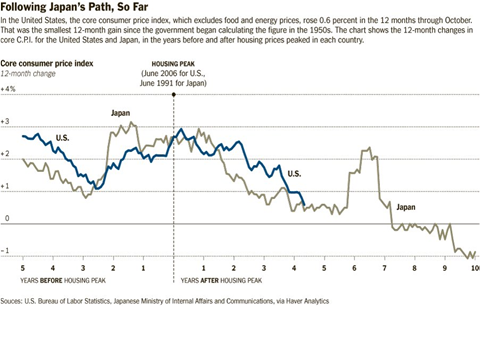
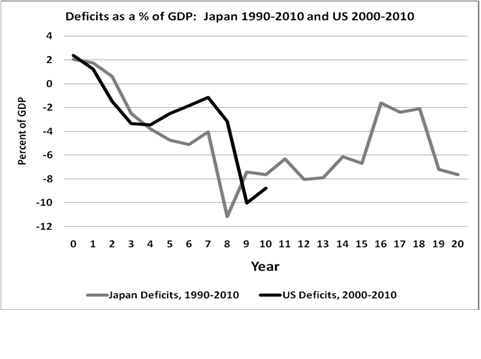
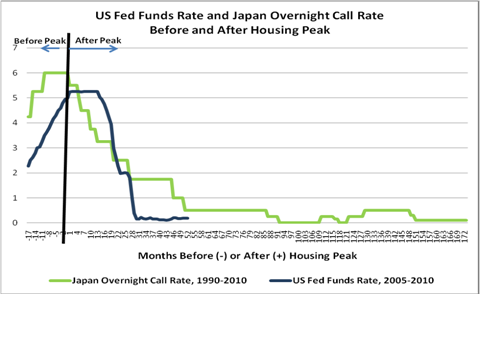
  4. The accounting scams combined with the Fed’s secret bailouts of insolvent U.S. and foreign banks also allowed the administration to enter into a cynical gambit on TARP. The continuing Fed’s subsidies are far larger than TARP. Bank CEOs were eager to get out of the TARP restrictions on executive compensation. The administration was eager to claim (A) that it had resolved the banking crisis, and (B) that it did so for a pittance. The accounting cover up of bank losses combined with the Fed subsidies were the perfect (political) answer that met the banks’ and the administration’s greatest desires. The combination allowed the banks to repay TARP. The banks got to hide their losses, receive large subsidies and cheap liquidity from the Fed, and report fictional profits that allowed them to repay the TARP funds and pay large bonuses to their officers. The administration got to make the absurd claim that it had resolved the largest banking crisis in U.S. (measured in absolute dollars) for a pittance (roughly20 billion). (The real economy and real estate losses in the many trillions of dollars produced20 billion in bank losses. “Too good to be true” hardly does justice to the absurdity of Geithner’s claims that he “resolved” the failures virtually without cost.) The combination of covering up and secretly subsidizing the SDI’s losses also explains the SDIs’ unwillingness to lend to the real economy. It’s safer to borrow funds from the Fed at next to nothing, buy bonds, and clip coupons. This perverse dynamic is one of the important factors, along with fraud, that has made the economic recovery so weak. We are following the failed Japanese strategy.
  5. The Fed is an “obvious gap” in regulation. The Fed has consistently sought to prevent the Congress and the public from learning the disgraceful facts of its bailouts and subsidies of the most undeserving rich in modern history. TARP did not resolve failures. The failures have been covered up and subsidized by the Fed. There is an urgent need to regulate the Fed. The Fed has a consistent record of regulatory failure and is actively hostile to transparency. During Obama’s term in office, Bernanke appointed as the head of all Fed examination and supervision an economist with no experience as an examiner or regulator. The economist is a strong proponent of the anti-regulatory economic philosophy that completely failed. Greenspan used him as the agency spokesman before Congress supporting the passage of the Commodities Futures Modernization Act of 2000 – the Act that created the multiple regulatory black holes that allowed the frauds that caused the California energy crisis of 2001 and contributed to the frauds that drove the ongoing financial crisis.
  6. The Fed’s regional banks have private directors with untenable conflicts of interest. The U.S. has already reached the policy decision in 1989 that such conflicts pose an unacceptable danger of producing ineffective regulation when it enacted FIRREA, which removed any conceivable authority of the private directors over the regulatory process.
  7. The administration could end the obvious gap in regulation known as the “too big to fail” doctrine at any time by adopting regulations that would stop the systemically dangerous institutions (SDIs) from growing and shrink them to the scale they would no longer pose a systemic risk within five years. (These regulatory gaps interact – many of the SDIs are insolvent yet are paying extraordinary bonuses to the officers that caused their massive, unrecognized, losses.) Instead, of shrinking the SDIs, the administration encouraged the SDIs to grow even larger and pose greater systemic risk. The administration opposed efforts to amend the Dodd-Frank bill to require the end of the SDIs. Remember, it is the administration that is telling us that there are 20 U.S. banks so large that as soon as the next one fails it is likely to trigger a systemic crisis. It is insane to roll the dice twenty times a day waiting for the next world crisis. The SDIs are one of those “obvious gaps” that the administration doesn’t find it politically correct to “address.” Effectively regulating the SDIs would be the antithesis of the administration’s campaign to ingratiate themselves with the SDIs.
  8. The administration could end the scandal of the lack of prosecution of the accounting control frauds that created the epidemic of mortgage fraud that hyper-inflated the largest bubble in history and drove the financial crisis and the Great Recession. Effective prosecutions against elite bank frauds are possible only with effective regulation and supervision. We know that the banking regulatory agencies – which made well over 10,000 criminal referrals in response to the far smaller S&L debacle (producing over 1000 felony convictions in “major” cases against elites – made no, or a handful of criminal referrals in response to this crisis. The Office of the Comptroller of the Currency (OCC) and the Office of Thrift Supervision (OTS) made zero criminal referrals during the crisis. The FDIC apparently made a very small number of criminal referrals, probably not against elites. It is unknown whether the Fed made any criminal referrals. There is no evidence it made any significant criminal referrals. The banking regulators’ dereliction of their duties to make criminal referrals is so complete that the FBI formed a “partnership” with the Mortgage Bankers Association (MBA) – the trade association of the perps – rather than with the banking regulators. Unsurprisingly, the MBA claimed that the banks were the victims of borrowers and junior officers rather than the CEOs who knowingly created the perverse incentives that drove the epidemic of mortgage fraud.
  9. Only 25 banks – during an “epidemic” of mortgage fraud – made any significant number of criminal referrals, and none of those referrals appear to have been made against the senior bank officers that caused those frauds. Federal rules mandate that the banks file criminal referrals against suspected mortgage fraud, so the data demonstrate endemic regulatory violations by banks. The data also demonstrate that the banks overwhelmingly did not want the FBI to prosecute the mortgage frauds. There is one obvious reason why the banks’ CEOs would be willing to violate a legal mandate to file criminal referrals. I have not found any evidence that the banking regulatory actions have brought enforcement actions against the banks committing these obvious, endemic violations of the law. The mortgage bankers and brokers were not federally insured and therefore were not subject to the rules mandating that they file criminal referrals when they found suspicious activities likely indicating mortgage fraud. The mortgage bankers and brokers, however, were permitted to file criminal referrals. Their nearly universal failure to do so was irrational for honest lenders and brokers – but optimal for control frauds. The administration has allowed the collapse of the criminal referral system within the regulatory agencies, and almost all lenders to continue on its watch. It could fix the scandal of elite bankers being able to loot with impunity without adopting any rules. Each collapse constitutes an “obvious gap” that urgently requires Obama’s attention.
  10. The Mortgage Electronic Registration Service (MERS) is unregulated. MERS, at best, was a system designed to evade county recorder fees. No one – and that includes MERS’ controlling officials – knows the true condition of the mortgage instruments that MERS is supposed to be registering. At best, it is a scandal that threatens the stability of homeowners and holders of instruments that are supposed to be secured by mortgages. MERS is an “obvious gap” in regulatory protections that demonstrates once more the wealth and job destroying consequences of the “completely failed” anti-regulatory philosophy that Obama promised to root out.
  11. The foreclosure scandal revealed an “obvious gap” in regulatory protections – no one regulates the foreclosure process. (The underlying epidemic of accounting control fraud by the nonprime mortgage lenders generated the “echo” epidemic of foreclosure fraud.) Bank of America, the second largest financial institution in America, acquired Countrywide in order to secure its personnel and its mortgage servicing portfolio. Countrywide was notorious for its fraudulent and predatory mortgage lending practices. Placing its employees in charge of servicing – the banking operation that controls the foreclosure process – guaranteed epic abuses. (Bank of America also managed to generate pervasive foreclosure abuses out of the staff it had prior to acquiring Countrywide.) Bank of America personnel, and personnel of other major servicers, eventually confessed that their foreclosure actions relied on massive, universal perjury (a felony). These “robo signing” crimes occurred at a frequency of roughly 10,000 monthly at more than one large servicer. Our most elite banks have confessed to committing hundreds of thousands of felonies.
  12. Fannie and Freddie. These entities are twisting slowly in the wind. Private and regulatory leadership have been ineffective and have lacked courage. I’ll mention only two areas. Fannie and Freddie used some of the most abusive foreclosure law firms in existence. Citicorp’s key mortgage credit guy testified many months ago before the Financial Crisis Inquiry Commission (FCIC) that 80% of Citi’s mortgages sold to Fannie and Freddie were sold under false “reps and warranties.” The Citicorp official’s warnings to his superiors about this extreme incidence of fraud did not lead to corrective action, so the official cc’d Rubin on key correspondence. Naturally, Citi responded by firing the whistleblower rather than the frauds. If Fannie and Freddie put the bad paper back to Citi, then Citi would be insolvent and Rubin would face serious risks. Fannie and Freddie have put only relatively small amounts of Citi’s paper back to Citi. (Note that the extreme incidence of fraud, and a similar incidence has been shown in Countrwide mortgage paper, again demonstrates how completely failed the anti-regulatory model is.) I have explained previously why Fannie and Freddie, because of their large holdings of nonprime paper from many originators and their dealings with credit rating agencies, offer unique data bases and opportunities for research to document exactly what wrong and how the fraud epidemic, bubble, and financial crisis grew and spread. This is a more subtle, but enormously important and dangerous regulatory gap.

L. Randall Wray and William Black interviewed for NPR report

L. Randall Wray and William K. Black were interviewed for NPR’s report, “Faulty Paperwork May Slow Millions of Foreclosures.”

http://www.npr.org/v2/?i=132930409&m=133012333&t=audio

The Anti-Regulators Are the ‘Job Killers’

By William K. Black

(via Huffington Post)

The new mantra of the Republican Party is the old mantra — regulation is a “job killer.” It is certainly possible to have regulations kill jobs, and when I was a financial regulator I was a leader in cutting away many dumb requirements. But we have just experienced the epic ability of the anti-regulators to kill well over ten million jobs. Why then is there not a single word from the new House leadership about investigations to determine how the anti-regulators did their damage? Why is there no plan to investigate the fields in which inadequate regulation most endangers jobs? While we’re at it, why not investigate the areas in which inadequate regulation allows firms to maim and kill. This column addresses only financial regulation.

Deregulation, desupervision, and de facto decriminalization (the three “des”) created the criminogenic environment that drove the modern U.S. financial crises. The three “des” were essential to create the epidemics of accounting control fraud that hyper-inflated the bubble that triggered the Great Recession. “Job killing” is a combination of two factors — increased job losses and decreased job creation. I’ll focus solely on private sector jobs — but the recession has also been devastating in terms of the loss of state and local governmental jobs.

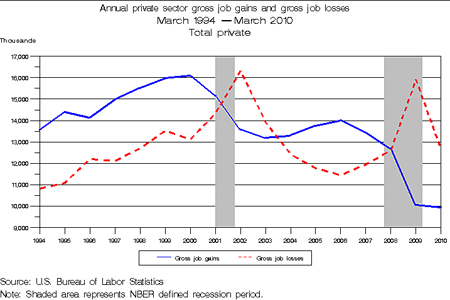
From 1996-2000, for example, annual private sector gross job increases rose from roughly 14 million to 16 million while annual private sector gross job losses increased from 12 to 13 million. The annual net job increases in those years, therefore, rose from two million to three million. Over that five year period, the net increase in private sector jobs was over 10 million. One common rule of thumb is that the economy needs to produce an annual net increase of about 1.5 million jobs to employ new entrants to our workforce, so the growth rate in this era was large enough to make the unemployment and poverty rates fall significantly.

The Great Recession (which officially began in the third quarter of 2007) shows why the anti-regulators are the premier job killers in America. Annual private sector gross job losses rose from roughly 12.5 to a peak of 16 million and gross private sector job gains fell from approximately 13 to 10 million. As late as March 2010, after the official end of the Great Recession, the annualized net job loss in the private sector was approximately three million (that job loss has now turned around, but the increases are far too small).

Again, we need net gains of roughly 1.5 million jobs to accommodate new workers, so the total net job losses plus the loss of essential job growth was well over 10 million during the Great Recession. These numbers, again, do not include the large job losses of state and local government workers, the dramatic rise in underemployment, the sharp rise in far longer-term unemployment, and the salary/wage (and job satisfaction) losses that many workers had to take to find a new, typically inferior, job after they lost their job. It also ignores the rise in poverty, particularly the scandalous increase in children living in poverty.

The Great Recession was triggered by the collapse of the real estate bubble epidemic of mortgage fraud by lenders that hyper-inflated that bubble. That epidemic could not have happened without the appointment of anti-regulators to key leadership positions. The epidemic of mortgage fraud was centered on loans that the lending industry (behind closed doors) referred to as “liar’s” loans — so any regulatory leader who was not an anti-regulatory ideologue would (as we did in the early 1990s during the first wave of liar’s loans in California) have ordered banks not to make these pervasively fraudulent loans.

One of the problems was the existence of a “regulatory black hole” — most of the nonprime loans were made by lenders not regulated by the federal government. That black hole, however, conceals two broader federal anti-regulatory problems. The federal regulators actively made the black hole more severe by preempting state efforts to protect the public from predatory and fraudulent loans. Greenspan and Bernanke are particularly culpable. In addition to joining the jihad state regulation, the Fed had unique federal regulatory authority under HOEPA (enacted in 1994) to fill the black hole and regulate any housing lender (authority that Bernanke finally used, after liar’s loans had ended, in response to Congressional criticism). The Fed also had direct evidence of the frauds and abuses in nonprime lending because Congress mandated that the Fed hold hearings on predatory lending.

The S&L debacle, the Enron era frauds, and the current crisis were all driven by accounting control fraud. The three “des” are critical factors in creating the criminogenic environments that drive these epidemics of accounting control fraud. The regulators are the “cops on the beat” when it comes to stopping accounting control fraud. If they are made ineffective by the three “des” then cheaters gain a competitive advantage over honest firms. This makes markets perverse and causes recurrent crises.

From roughly 1999 to the present, three administrations have displayed hostility to vigorous regulation and have appointed regulatory leaders largely on the basis of their opposition to vigorous regulation. When these administrations occasionally blundered and appointed, or inherited, regulatory leaders that believed in regulating the administration attacked the regulators. In the financial regulatory sphere, recent examples include Arthur Levitt and William Donaldson (SEC), Brooksley Born (CFTC), and Sheila Bair (FDIC).

Similarly, the bankers used Congress to extort the Financial Accounting Standards Board (FASB) into trashing the accounting rules so that the banks no longer had to recognize their losses. The twin purposes of that bit of successful thuggery were to evade the mandate of the Prompt Corrective Action (PCA) law and to allow banks to pretend that they were solvent and profitable so that they could continue to pay enormous bonuses to their senior officials based on the fictional “income” and “net worth” produced by the scam accounting. (Not recognizing one’s losses increases dollar-for-dollar reported, but fictional, net worth and gross income.)

When members of Congress (mostly Democrats) sought to intimidate us into not taking enforcement actions against the fraudulent S&Ls we blew the whistle. Congress investigated Speaker Wright and the “Keating Five” in response. I testified in both investigations. Why is the new House leadership announcing its intent to give a free pass to the accounting control frauds, their political patrons, and the anti-regulators that created the criminogenic environment that hyper-inflated the financial bubble that triggered the Great Recession and caused such a loss of integrity?

The anti-regulators subverted the rule of law and allowed elite frauds to loot with impunity. Why isn’t the new House leadership investigating that disgrace as one of their top priorities? Why is the new House leadership so eager to repeat the job killing mistakes of taking the regulatory cops off their beat?

Fannie and Freddie’s Managers bought Nonprime Paper for the same Reason Merrill Did


(via Benzinga)
The Republican members of the Financial Crisis Inquiry Commission have conducted a preemptive strike.  They issued a report arguing that the problem with Fannie and Freddie was regulation and politics and that Fannie and Freddie are responsible for the U.S. financial crisis – so regulation is the great evil.  This subdivides into four arguments: the Community Reinvestment Act (CRA), Congress’ rejection of an administration proposal to give OFHEO greater supervisory powers, specifically, the power to place Fannie and Freddie in receivership, the ability of Fannie and Freddie to borrow due to their status as Government-Sponsored Enterprises (GSEs), and the rules on Fannie and Freddie making a rising percentage of their loans to those with below median income.
The CRA argument fails on multiple levels.  The CRA became law in 1977 so it is a poor candidate to explain the rise of a crisis a quarter-century later.  Its enforcement did become slightly stronger under the Clinton administration, but it became far weaker under the Bush administration.  If the CRA caused banks to make more bad home loans, then bad loans should have fallen this decade as enforcement efforts fell.  Most nonprime loans were made by entities that are not federally insured – and not subject to the CRA.  The uninsured lenders made nonprime loans for the same reason that insured banks made the loans – doing so guaranteed the creation of record short-term income and executive compensation.  When, for example, we (OTS’ West Region) used our supervisory powers in the early 1990s to stop a sharp rise in the issuance of liar’s loans by a number of S&Ls based in California, Long Beach Savings responded by giving up its charter and federal deposit insurance so that it could become a mortgage banking firm.  Long Beach changed its name to Ameriquest and became the nation’s most infamous predatory lender specializing in making nonprime loans.  Ameriquest changed its charter so that it was not subject to the CRA – as part of a deliberate strategy to expand massively its nonprime lending.  The CRA does not require a lender to make a bad loan.  The nonprime lenders made liar’s loans which inflated the borrower’s purported income, which could make a loan that could have received credit under the CRA appear not to do so.   If the CRA drove increased liar’s loans then lenders and their agents should have falsified the income disclosures on liar’s loans’ applications by reporting reduced income.  In reality, lenders and their agents used liar’s loans to inflate substantially the borrower’s income.

President Bush did propose legislation to strengthen OFHEO’s supervisory powers and Congress declined to pass the bill.  The defeat of the bill, however, played no role in the crisis.  Moreover, while more Congressional Democrats than Republicans opposed the bill, it was a bipartisan coalition that killed the bill.  (I would have voted for the bill and I am a critic of Fannie and Freddie.)  The bill proved to be irrelevant because (1) OFHEO already had ample statutory authority to prevent Fannie and Freddie from purchasing liar’s loans’ paper and uncreditworthy subprime loans, and (2) the Bush administration did not foresee the nonprime loan crisis or the housing bubble and it did not rein in Fannie and Freddie’s purchase of nonprime mortgage paper.  The Bush administration, the Fed, and Peter Wallison did not identify, warn against, and seek to pop the housing bubble.  They did not identify and warn against nonprime lending.  Instead, they encouraged nonprime loans and ignored the warnings of the State attorneys general, consumer advocates, the FBI, and the mortgage industry’s own anti-fraud experts of the growing epidemic of fraud brought on by liar’s loans.  They did not warn against the dangers of Fannie and Freddie purchasing nonprime paper.  Instead, they encouraged them to do so.  OFHEO and Lockhart did not identify nonprime paper as a serious risk.  The bill proposed by President Bush would not have limited Fannie and Freddie’s purchase of nonprime paper.  If the bill had become law Lockhart would not have used it to restrain Fannie and Freddie’s purchase of nonprime paper – a restraint he already had authority to impose. 
The systemic risk that Wallison, the Fed, and Lockhart focused on arose from Fannie and Freddie purporting to use “dynamic hedging” to hedge their interest rate risk created by their rapid portfolio growth.  The critics’ concerns about interest rate risk and dynamic hedging were valid.  Very large dynamic hedging can cause systemic risks – but that particular concern did not contribute to this crisis.  (Moreover, OFHEO already had the authority to prevent Fannie and Freddie from engaging in purported dynamic hedging.  OFHEO used that existing authority to order extensive changes to Fannie and Freddie’s conventional purported hedging practices.  I use the word “purported” because Fannie and Freddie were recurrent accounting control frauds.  One of the ways in which they committed accounting fraud was to make misrepresentations about their hedging operations.)          
Fannie and Freddie did not have explicit federal guarantees.  They were privately-owned corporations.  The markets, however, considered them to be “too big to fail.”  The markets assumed that it was highly likely that the Treasury would prevent defaults on MBS issued by Fannie and Freddie.  Fannie and Freddie did have unique features, but the “too big to fail” aspect was, as we have seen, far from unique.  Some critics argue that if Fannie and Freddie were never created then the current crisis could not have occurred or at least would have been far smaller.  The argument is that Fannie and Freddie had the unique ability to borrow large amounts of funds while being insolvent due to their holdings of uncreditworthy nonprime paper.  The problem with this assertion is that most of the “too big to fail” banks (investment and commercial) were major purchasers of nonprime paper and they too were in reality insolvent because of their (unrecognized) losses on that nonprime paper.  Fannie and Freddie came later to the nonprime paper party than many of its peers.
Fannie and Freddie did have unique rules ratcheting up the proportion of their loans that should be made to lenders with below median incomes.  Americans are relatively wealthy, so it is not sound to conflate “below median” with “poor” or “low income.”  Fannie and Freddie could comply with some of the goals by purchasing prime mortgage loans made primarily to middle-income Americans.  There were no penalties if Fannie or Freddie failed to meet the affordable housing goals.  The goals were complex (there were three subsets) and they increased over time.  Fannie and Freddie did not always meet the goals.  They often purchased a lower percentage of “affordable” loans than the mortgage industry originated.  As to some of the goals, however, Fannie and Freddie often exceeded the goal.  The overall numbers, therefore, do not establish that the affordable housing goals drove Fannie and Freddie’s mortgage purchase decisions. 
There are excellent ways of teasing out whether Fannie and Freddie’s mortgage purchase decisions were driven by a search for yield in order to maximize their controlling officers’ compensation (which is what the SEC investigators had found earlier in the decade) or by the goals.  Liar’s loans are the best way to determine the controlling officers’ motivations.  The lenders and their agents used the absence of underwriting that is the defining element of a “liar’s loan” to substantially inflate the borrowers’ income without leaving a clear paper trail of their fraud.  In 2006, the Mortgage Asset Research Institute (MARI) explained in its Eighth Annual report to industry about mortgage fraud:      
“Stated income and reduced documentation loans speed up the approval process, but they are open invitations to fraudsters. It appears that many members of the industry have little historical appreciation for the havoc created by low-doc/no-doc products that were the rage in the early 1990s. Those loans produced hundreds of millions of dollars in losses for their users.”
“One of MARI’s customers recently reviewed a sample of 100 stated income loans upon which they had IRS Forms 4506. When the stated incomes were compared to the IRS figures, the resulting differences were dramatic. Ninety percent of the stated incomes were exaggerated by 5% or more. More disturbingly, almost 60% of the stated amounts were exaggerated by more than 50%. These results suggest that the stated income loan deserves the nickname used by many in the industry, the “liar’s loan.””
It was also common for liar’s loans to have seriously inflated appraisals.  This lowered the reported loan-to-value (LTV) ratio and increased the loan’s sales value.  Appraisal fraud also leads to unusually severe losses upon default.  It was lenders and their agents who deliberately created the perverse incentives (Gresham’s dynamic) that produced the “echo” epidemic of appraisal fraud.  (The borrower can rarely induce the appraiser to inflate the valuation.)  An honest secured lender would never cause, or permit, appraised values to be inflated.  Widespread appraisal fraud is a superb “marker” for identifying lenders engaged in accounting control fraud.  Note that a similar point applied to Fannie and Freddie.  They were exposed to severe losses if appraisals were inflated – and published reports had established that there was an epidemic of appraisal fraud.  Fannie and Freddie, if they were run by honest managers, would have reviewed a sample of the appraisals prior to purchasing mortgage paper.  Had they done so, however, they would have found that fraud was so pervasive in nonprime lending that they could not purchase the product.  The result was that financial participants dealing in nonprime paper adopted the financial version of “don’t ask; don’t tell.”  That approach would allow Fannie and Freddie’s officers to report high income and obtain large bonuses in the short-term, but it would also doom Fannie and Freddie.
Fannie and Freddie’s attainment of the affordable housing goals was measured, in the context of liar’s loans, by “stated income.”  Lenders and their agents engaged in pervasive, large inflation of those incomes because that deceit would increase the price the lender could obtain when he sold the loan.  Buying liar’s loans would simultaneously (1) massively increase Fannie and Freddie’s losses and, (2) reduce their reported compliance with the affordability guidelines by making it appear that Fannie and Freddie were buying mortgages made to those with higher incomes.  That would be a significantly insane strategy for Fannie and Freddie’s senior officers to follow if they were honest and making their business decisions based on a felt need to comply with the affordability guidelines. 
We don’t know the total dollar amount of liar’s loan paper that Fannie and Freddie purchased, but we know that it is enormous.  (The fact that we do not know tells us a great deal about the continuing weakness in the regulation of Fannie and Freddie).  In the Fannie report I reviewed they falsely reported that their liar’s loans were “prime” loans.  Fannie and Freddie’s huge purchases of liar’s loans and the efforts to mislead their investors and OFHEO about the extent of their purchases of liar’s loans only make sense if their controlling officers were following their recurrent strategy, the one laid out in the title of Akerlof & Romer’s 1993 article – “Looting: the Economic Underworld of Bankruptcy for Profit.”  Fannie and Freddie’s controlling officers repeatedly wanted a “sure thing.”  Purchasing high yield liar’s loan paper maximized their compensation and let them walk away rich. 
If Fannie and Freddie had purchased only subprime mortgage paper to lower income borrowers we would have had more difficulty discerning whether they did so because of the guidelines or the yield.  The huge portfolio of liar’s loan paper, however, makes no sense if they were running an honest financial institution subject to affordable housing guidelines.  No honest CEO would purchase vast amounts of loans that were “an open invitation to fraudsters” and were sure to produce losses so catastrophic that they would cause Fannie and Freddie to fail.  Fannie and Freddie’s CEOs had been warned by the FBI, MARI, and their own staff about the epidemic of mortgage fraud.  Making liar’s loans made it harder for Fannie and Freddie to meet the affordable housing goals.  Why would an honest CEO overpay massively to acquire pervasively fraudulent assets that frequently did not count towards the affordable housing goals?  
Fannie and Freddie caused such horrific losses because they were private institutions run by officers who obtained a “sure thing” – great wealth through booking high yield in the near term without establishing meaningful loss reserves.  OFHEO and the SEC had blocked Fannie and Freddie’s prior accounting scam (abusive hedge accounting) and limited Fannie and Freddie’s growth.  Fannie and Freddie’s officers’ optimal remaining strategy, given OFHEO’s imposition of a constraint on growth, was to maximize reported short-term accounting income by purchasing very high (nominal) yield mortgage paper and not provide adequate loss reserves.  Liar’s loans offered the best nominal yield (many subprime loans are also liar’s loans).  Fannie and Freddie’s officers profited through the quintessentially private sector method of looting a corporation – executive compensation based on short-term, fictional, reported income followed by catastrophic losses and insolvency.     

Round Table: Economics 101 for Politicians and Policy Makers

L. Randall Wray and Warren Mosler participated in a round table discussion for George Jarkesy’s “New Captains of Industry” show on blogtalkradio.com. The complete broadcast can be heard here.

Pressures on the Paradigm: The Fall of the New Monetary Consensus

By L. Randall Wray

The following is a paper given at the ASSA conference in Denver this past week for a panel organized by James Galbraith, titled Pressures on the Paradigm, sponsored by Economists for Peace & Security.

The Queen famously asked her economists why none had seen the global crisis coming. Obviously the answer is complex, but it must include the evolution of economic theory over the postwar period—from the “Age of Keynes”, through the Friedmanian era and the return of virulent Neoclassical economics, and finally on to the New Monetary Consensus with a New anti-Keynesian version of fine-tuning by an unaccountable (“independent”) central bank

We cannot leave out the parallel developments in finance theory—with its efficient markets hypothesis—and the subsequent deregulation and de-supervision that led to the financialization of everything.

But to make a long story short: if your theory says that a global collapse is impossible, you won’t see one coming. In truth, as Jamie has argued in his great book, the Predator State, no one outside Chicago and other institutes of the higher learning ever took the free market mantra seriously—outside the ivory towers it was nothing but a slogan, a justification for enrichment of the powerful few.

Like Jamie, I believe orthodox macroeconomics is finished—although not all the zombie practitioners of that dismal religion recognize they are dead. After the crisis hit, Jamie, Duncan Foley and I were invited to appear on panels at the University of Chicago along with a dozen or so of the Chicago boys.

Not surprisingly, none of them was budging from his dogma of free and efficient markets: the crisis was caused by too much government interference; the solution is more deregulation. Three years into this crisis those who never saw it coming proclaim signs of recovery everywhere they look.

And, still, it is only academia that is clueless. Everyone in financial markets saw it coming—indeed, they planned on it and worked fastidiously to create it. They would profit on the way up, and then profit more in the collapse whilst collecting on their credit default swap bets and stealing all the homes.

It is Bush’s ownership society and the goal all along was to transfer all ownership to the top through the creation of serial bubbles—what Michael Hudson calls Bubbleonia. The biggest land grab since the enclosure movement.

So, no, there is no recovery. The banks are more massively insolvent than they were 2 years ago. They are cooking their books so they can pay executive bonuses and reward the traders and the foreclosers who are successfully transferring all wealth to the elite.

But Jamie asked me to address the state of theory—not the economy.

I want to focus on one particular Zombie that needs a stake through its heart or a bullet through its head: the New Monetary Consensus. This is an updated New Keynesian version of the old Bastard ISLM model.

The idea is that inflation slows growth so it must be diligently fought. The Fed will keep inflation expectations low, inflation will be low, and growth will be robust.

Every link in that sentence is a delicious illusion.

The Fed supposedly manages expectations by convincing markets that it controls inflation, and so long as it controls expectations it can control inflation.

But if it cannot control expectations it cannot manage inflation and all bets are off. What a flimsy reed upon which to hang public policy!

And in any case, why should low inflation generate robust growth? Because—well, because the Fed says it will, contrary to all evidence.

Out in the real world, expectations alone cannot govern any economic phenomena: inflation expectations will determine actual inflation only if those with ability to influence prices act on those expectations. And inflation below the high double digits has never proven to be a barrier to economic growth.

Let us take the current experience as an example. We have moved on to QE2, an application of the NMC.

Helicopter Ben is supposedly injecting trillions of dollars of money into the economy to create expectations of inflation—to counter the deflationary real world forces. And many wingnuts actually ARE expecting inflation—running around like Chicken-Littles, buying gold and screaming about hyperinflation and collapse of the dollar. And, yet, no inflation. Why?

Because those who might have pricing power—corporations and organized labor—cannot create inflation. Workers cannot increase their wages given massive global unemployment, and firms cannot increase prices in the face of competitive pressures. So no matter how strong is the will to believe, it has no purchase against the facts.

The wingnuts will be proven wrong. The Fed cannot create inflation. It is within the power of the central bank to lower the price of reserves—the overnight rate–as close to zero as it wants. It can also lower longer term rates on assets it is willing to buy, but there is a nonzero practical limit to that based on what Keynes called the square rule.

Quantitative easing supposedly pumps money into the economy to generate spending in order to create expectations of inflation. But all it really amounts to is substituting reserves for treasuries on bank balance sheets—lowering their interest earnings. QE won’t work because:

• (1) additional bank reserves do not enable or encourage greater bank lending;

• (2) the interest rate effects are small at best, and are swamped by private sector attempts to deleverage;

– The best estimate based on NYFed work: 18 basis points

• (3) purchases of Treasuries are simply an asset swap that reduce the maturity of private sector assets, but do not raise private sector incomes; and

• (4) given the reduced maturity of private sector portfolios, reduced interest income could actually be deflationary.

But we knew all that—Japan has been doing QE for 20 years, trying to create expectations of inflation in the face of deflationary headwinds, thus, it is interesting to compare Japanese and US experience (so far) by looking at a series of three graphs.

As they say, history doesn’t repeat itself but in this case it rhymes nicely. Only insanity would lead us to follow Japan’s path while expecting different results.

Let me finish my critique of the NMC with an observation of a Galbraith—John Kenneth this time:

To limit unemployment and recession in the US and the risk of inflation, the remedial entity is the Fed… For many years (with more to come) this has been under the direction from Washington of a greatly respected chairman… The institution and its leader are the ordained answer to both boom and inflation and recession or depression… Quiet measures enforced by the Fed are thought to be the best approved, best accepted of economic actions. They are also manifestly ineffective. They do not accomplish what they are presumed to accomplish. Recession and unemployment or boom and inflation continue. Here is our most cherished and, on examination, most evident form of fraud.

Even if the early postwar “Keynesian” economics had little to do with Keynes at least it had some connection to the real world. What passed for macroeconomics on the precipice of the global collapse had nothing to do with reality—it is as relevant to our economy as flat earth theory is to natural science.

In short, expecting the Queen’s economists to foresee the crisis would be like putting flat- earthers in charge of navigation for NASA and expecting them to accurately predict points of re-entry and landing of the space shuttle. Of course, the economic advisors to Presidents Bush and Obama could do no better.

Referring to the work of the best known economists over the past thirty years, Lord Robert Skidelsky argues “Rarely in history can such powerful minds have devoted themselves to such strange ideas.” Not only were they strange, but the ideas of the Larry Summers’, Bob Rubins, Mankiws, Marty Feldsteins, Bernankes and John Taylors of the world were, predictably, dangerous.

But one economist got it right, and did see it coming. And that is Hyman Minsky. His theory said it can happen again: market forces are destabilizing.

The economy emerged from WWII with a robust financial system—hardly any private debt and lots of safe and liquid government debt. Various New Deal and postwar reforms also made the economy stable: a safety net that stabilized consumption; strict financial regulation; minimum wage laws and support of unions; low cost mortgages and student loans, and so on. And memories of the Great Depression discouraged risky behavior.

Gradually all that changed—memories faded, self-regulation replaced financial regulations, unions lost power and government support, globalization brought low-wage competition, and the safety net was shredded. Further, profit-seeking firms and financial institutions took on greater risks with ever more precarious finance. Thus, fragility grew on trend. This made “it” possible again.

While most who invoke Minsky focus on the crash, he believed that the main instability is a tendency toward explosive euphoria. High aggregate demand and profits associated with high employment raise expectations and encourage increasingly risky ventures based on commitments of future revenues that will not be realized.

A snowball of defaults then leads to a debt deflation and high unemployment unless there are “circuit breakers” that intervene to stop the market forces. The main circuit breakers, are the Big Bank (central bank as lender of last resort) and Big Government (countercyclical budget deficits).

And, boy-oh-boy have we got a Big Bank and a Big Government! Together, the Benny and Timmy tag team have spent, lent, or guaranteed $25 trillion in the name of Uncle Sam. And that still is not enough. “It” is still happening.

The problem is that most of this was done by the Big Bank Fed, aimed at helping financial institutions—trying to prop up their worthless assets. In short, it was based on the theory that we need Money Manager capitalism and that the only hope is to generate another bubble.

It won’t work. Financialization is the problem, not a sustainable economic strategy. We need to turn instead to an updated Keynesian-Minskian New Deal based on jobs, growing wages, consumption—especially public consumption, constrained and downsized finance, and greater equality. Monetary policy also has to be downsized, while fiscal policy has to play a bigger role. Not fine-tuning but a positive and permanent presence to counter and guide and supplement the private purpose.

More importantly we’ve got to formulate theory applicable to the world in which we actually live—not one in which imaginary representative agents allocate resources along an optimal consumption path.

To that end, we stand on the shoulders of the giants like Minsky in the heterodox tradition.

William Black interviewed on Bloomberg

William Black was interviewed yesterday on Bloomberg.  The full interview is available via youtube.com here.