Reply to Reinhart and Rogoff’s NYT Response to Critics

By
Warren Mosler
(Cross-posted with permission of the author from
The Center of the Universe)

The intellectual dishonesty continues. As before, it’s the lie of omission.

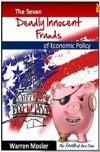
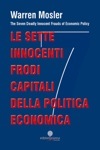
R and R are familiar with my book ‘The 7 Deadly Innocent Frauds of Economic Policy’ and, when pressed, agree with the dynamics.

They know there is a more than material difference between floating and fixed exchange rate regimes that they continue to exclude from their analysis. Continue reading

Bitcoin’s Deflationary Weirdness

By Dan Kervick

I appeared today on The Attitude,  broadcast by WNHN 94.7 in Concord, New Hampshire, to talk with host Arnie Arnesen about the Bitcoin phenomenon.  The podcast of the second hour of the show can be accessed at the link below.  My appearance occurs right at the beginning of the hour:

The Attitude – Bitcoin

The purpose of our brief discussion was just to provide some general background information for Arnie’s listeners about Bitcoin, including what bitcoins are and why anyone would buy them or accept them in exchange for goods and services.   We touched on several topics related to the Bitcoin phenomenon, but there is one very peculiar and puzzling feature of Bitcoin that we didn’t get to discuss and that seems especially important to me:  the Bitcoin system has what appears to be a built-in deflationary architecture.

Continue reading

Modern Monetary Theory – An Introduction: Part 3

By Dale Pierce

III. Taxing and Spending

MMT 101

The state’s money is a good store of value and a reliable medium of exchange because absolutely everybody needs at least a little of it. Even off-the-grid survivalists and doomsday preppers need it. Because when they pay for their hollow-point ammunition at Dick’s, or for their freeze-dried mashed potatoes at Costco, they not only pay for the goods – they also pay the sales tax. Now, Dick’s and Costco only take dollars or dollar-denominated credit anyway, but what makes the state’s money valuable is that every company has to collect the tax piece in dollars and cents – and pay dollars to the government at the close of each week or month or other accounting period. Between sales taxes, property taxes, income taxes and all other taxes, everyone knows that there will be a stable, long-term demand for the currency which the state alone can issue. If this currency is reasonably well-managed by the country’s monetary authorities, it will remain everyone’s preferred legal tender – unless a person really is a survivalist or some other kind of crank. Continue reading

Making The Case Against Austerity

By Stephanie Kelton

Neil Irwin at Wonkblog has a new post up:  The Deficit is Falling Fast. Can Washington Accept Victory?

He quotes John Makin of the American Enterprise Institute, who says, approvingly, that the U.S. has probably imposed enough austerity “for now.”  Then he shows us the evidence. Continue reading

Modern Monetary Theory – An Introduction: Part 2

By Dale Pierce

II. The Science of Government 

Backlash

The wave of capitalist triumphalism that spread around the world from the 1980s on was, and remains, a very complex social, political and economic phenomenon. Future historians, if there are any, will marvel at the suddenness of its rise and the completeness of its victory. Margaret Thatcher and Ronald Reagan seemed to come out of nowhere. Working class Tories and Reagan Democrats rose up in their millions – to vote against the very parties and ideas that had made them prosperous. And which had also made it possible for many of them to send their kids to college for the very first time. The kids themselves graduated into an economy plagued by inflation and full of uncertainties and unknowable quantities that everyone, everywhere seemed determined to blame on some English guy named John Maynard Keynes. Him and his Welfare State. And all that reckless deficit spending. And all those high taxes. Who wanted to be for things like Welfare and taxes? So, a lot of those kids went ahead and took the logical next step and became Young Republicans. Continue reading

Modern Monetary Theory – An Introduction: Part 1

By Dale Pierce

Chapter One

Introduction

This is Chapter One of a three-part overview of a body of economic thought known popularly as “Modern Monetary Theory” or “MMT”. The aim of this chapter is to explain the basic dynamics of our present-day “fiat-money” economy through the dual lenses of government spending and taxation. We will also explore some contested history, and examine some of the ways we need to think about money differently, now that the United States, along with the rest of the world, has gone off any version of a gold standard. The intent is to be as non-technical as possible, but some parts of the subject are, unavoidably, a little complex. In these areas, keeping the logic as step-by-step as possible will be the goal. In Chapter Two we will look at the ways money systems sometimes go haywire, through either inflationary malfunctions or through the (thankfully) less-familiar phenomenon called deflation, including “debt deflation”. Chapter Three will be about Jobs, Jobs, Jobs. Continue reading

Federal cuts put women and children last

IN forcing the sequester, House Republicans have ensured cuts to programs that fund breast and cervical cancer screenings, child-care assistance and more.

By Susan Feiner, Posted in Maine Sunday Telegram

The congressional GOP, like the captain of the Titanic, put women and children first.

The Titanic’s captain was trying to save people’s lives. In contrast, House Republicans, having contrived the sequester — $85 billion in federal budget cuts — are steering straight for that iceberg. And when the economy hits it, when the sequester cuts are fully implemented, women and children will go down first.

Read the rest of the article in the Maine Sunday Telegram.


Modern Money and Public Purpose Seminar 6

The latest in the MMPP Seminars at Columbia feature NEP’s Scott Fullwiler. The topic of this seminar is Interactions Between Monetary and Fiscal Policy. You can watch below or visit MMPP’s site.

Robert Reich has a Good Heart but an Inadequate Grasp of Economics

By William K. Black
(Cross posted from Benzinga.com)

Robert Reich has written a column entitled “Why this is the Worst Recovery on Record.”  It’s an odd title because the article makes no reference to this being “the worst recovery on record.”  Unlike a newspaper column, we know that Reich chose the title, because it comes from his own blog.

The current U.S. recovery is not “the worst recovery on record” – it is not faintly close to the worst recovery on record.  Rhetorical claims like this are dependent on highly selective choices of what years one compares.  In 1937 and 1938, President Roosevelt listened to the incoherent claims of his economic advisors that stimulus was bankrupting the Nation and that it had spurred a sufficiently robust recovery that the private sector could now be relied upon to lead the Nation promptly back to prosperity.  The advisors recommended that FDR act urgently to impose austerity.  FDR cut spending and increased taxes and the Federal Reserve tightened the monetary supply.  The result was that a robust recovery from the Great Depression that reduced unemployment by two-thirds during FDR’s first term from a high of 25%.  Real GDP growth averaged 12% during that term. Continue reading

Was “Cigarette-Money” in World War II POW Camps a Case of Commodity Money Origination?

By Matthew Berg

1. A Parable About the Origin of Money

Perhaps the most convincing single example cited by proponents of the view that money is a commodity is the well-known use of cigarettes as “money” by Allied prisoners of war in Germany during World War II. Just six months after being liberated by the U.S. Army, former POW R.A. Radford published his famous article in the journal Economica, “The Economic Organization of a P.O.W. Camp,” describing how he and his compatriots had used cigarettes as a medium of exchange during their unpleasant stay at their not-so-idyllic Bavarian Stalag. Continue reading