William K. Black
Like the Sirens reputed to lure sailors onto rocks, a series of columnists who want President Obama to fail are praising Obama’s capitulation on extending the Bush tax cuts for the wealthy. The motif of these comments has three common characteristics – all designed to destroy the Obama presidency. First, and the chutzpah of this aspect is wondrous, those that hate Obama’s policies are telling Obama he is demonstrating his strength by surrendering on the Bush tax cuts to the wealthy. Second, they claim that Obama “moved to the center” by agreeing to support tax cuts for the wealthy. Third, they claim that Obama’s attacks on his strongest supporters are brilliant politics essential to saving his Presidency.
Dana Milbank’s recent column is one example of the three-part motif. The title of the column captures the first aspect: “Obama finally stands his ground.” What he means of course is that Obama failed to stand his ground, repudiating his promises to end the Bush tax cuts for the wealthy. Milbank also said that while extending the Bush tax cuts for the wealthy was “dumb,” Obama’s agreement to extend those tax cuts was the first thing that Obama had ever done that made Milbank “proud.” Milbank is finally “proud” because Obama is excoriating his strongest political supporters – the “liberals” who Milbank detests. Milbank’s explanation of why he detests liberals parrots conservative Republicans.
Monday, we were treated to the triple motif from another commentator who desperately wants Obama to fail. Mark Penn, the CEO of Burson-Marsteller, claims in a column entitled “Democrats need to back Obama” that:
By becoming reverse tax protesters (chanting “raise taxes”), the liberals are sending out all the wrong messages to a country that overwhelmingly backs the key elements of the bipartisan deal the president struck.
[T]he Democrats have got to stop returning to class warfare.
Obama took the first step this week in seeking to save his floundering presidency by moving to the center. His execution was far from perfect but his actions were sound.
Obama has now gone down a path he cannot and should not retreat from — governing from the center.
In a series of untruthful sentences, Penn hits each of the elements of the motif. Supporting the Bush tax cuts for the wealthy constitutes “moving to the center.” “Liberals” are the demons whose desire to raise taxes would doom the Obama Presidency. Bush doesn’t engage in “class warfare” when he cuts tax rates for the wealthiest Americans – anyone who opposes Bush’s tax cuts for the wealthy, however, is engaged in “class warfare.” Obama’s capitulation on Bush tax cuts for the wealthy is not a retreat from his campaign promises – repudiating his capitulation to the Republicans on those tax cuts would constitute a “retreat” and demonstrate weakness.
None of Penn’s claims are true. The folks pushing for tax increases, during a severe recession, are financial conservatives in both parties. They were the deficit hawks, and Obama appointed many of them to the deficit commission. It was the Republicans who were holding tax cuts for 98% of U.S. taxpayers hostage. By calling the Republican bluff on taxes the House caused the Republicans to make this clear to the American people. The Republicans’ strategy would have compelled them to raise taxes on nearly all Americans, which is why their strategy was a bluff.
Obama’s promise to end the Bush tax cuts for the wealthy was supported by a strong majority of Americans. That means that Obama’s capitulation on those tax cuts constitutes a move away from the center toward the far right. This makes perfect sense. The people who want Obama to fail consistently push him to abandon policies that are desirable and broadly supported by the public because they want Obama to fail. Obama cannot seem to grasp that straight forward concept. Milbank, for example, attacks liberals’ support for the public option because it was both substantively critical to an effective health care plan (because it would contain costs) and politically popular.
Penn’s claim that Obama must not “retreat” on his capitulation on Bush tax cuts for the wealthy because that would demonstrate weakness is so obviously backwards that one is in awe of his willingness to spin fables that are the opposite of the truth. Penn comes by his willingness to spin professionally – it’s what he does for a living. He gets paid enormous sums to spin absurdities that have no basis in reality. Penn is the CEO of Burson-Marsteller, a PR firm. BM goes well beyond the typical PR firm. As Rachel Maddow has said, “When Evil needs public relations, Evil has Burson-Marsteller on speed-dial.” There is an entire web site devoted to BM’s penchant for putting a happy face on mass murderers.
There are three questions that we need to ask about the campaign by those who want Obama to fail to encourage him to support the Bush tax cuts for the wealthy by advancing this three-part motif. First, why would those who want Obama to fail suddenly offer him good, sincere advice on how to succeed? Second, why would any Obama supporter believe that they were offering him advice on how to succeed rather than suckering him into political suicide? Third, given the facial absurdity of the motif and the obvious incentive of the commentators to harm Obama, why wouldn’t Obama treat their comments as conclusive evidence that his capitulation on the Bush tax cuts for the wealthy was a disastrous mistake?
Cumulatively, these questions lead to a disturbing inference. The Milbanks and Penns of the world invest the time to spin these fables because they think that senior members of the administration hate liberals so badly, and are so desperate for compliments, that they will fall for praise from people that hate them and want them to fail. They hope that the administration will take their advice and destroy itself and the Democratic Party by adopting policies that harm the nation (by making already record income inequality even worse) and require Obama to betray his campaign promises. It’s hard to conceive of a nastier insult to the administration – they’re convinced that Obama and his senior staff are uniformly incompetent.
The ideal result for supporters of the Bush tax cuts for the wealthy is to get them extended in a manner that allows Republicans to escape from the suicidal bargaining position they were in on holding taxes for 98% of American taxpayers hostage and blocking the extension of unemployment benefits, in a fashion in which the Republicans get to take primary credit for all of the tax cuts, and while causing the President to betray his campaign promises and launch an attack on his strongest supporters – an attack taken word-for-word out of the Republican playbook. That is precisely what they’ve achieved. They did not achieve the result through brilliance and they cannot achieve it without cowardice and ineptitude on the part of the Democrats.
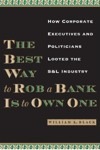
Bill Black is an associate professor of economics and law at the University of Missouri-Kansas City. He is a white-collar criminologist, former senior financial regulator, and author of The Best Way to Rob a Bank is to Own One.
I'm so glad I found this site and I hope it goes viral. Regarding this article, pretty much everything that comes out of the oligarchs media prostitute's mouths can be counted on to be the exact opposite of the truth."Democrats have got to stop returning to class warfare."No, what they need to do is defend themselves from the class warfare started by those who have seized control of government."(chanting "raise taxes")"….and that's exactly what we should be doing. Raising taxes on the rich. If history has taught us anything, it's that concentrated wealth destroys democracies. It distorts and perverts markets and enriches the few at the expense of the many.Monetary reform is what is needed for this country and it's not just WHO controls the creation of money but HOW it's distributed. If it all goes to the banks, as we have seen, it further exacerbates our problems. When it goes to the many, they spend it and the economy improves.Pick any decade in the last 100 or so years that you think the economy was on a sustainable path and then look at the marginal tax rates for the upper one percent. Hopefully, one would see that without the cooling effect of high tax rates on the rich, an imbalance occurs where unearned income is extracted from the economy at the expense of the masses that make the system work.
The thing that puzzles me is why anyone would want to increase taxes on the wealthy (aside from class-warfare jealousy that makes the poor love to see the wealthy injured)..Increasing taxes on the wealthy removes money from the economy. This always hurts the economy..Taxing the rich does not aid the poor in any way. It does not allow the federal government to spend more on "other things." .As a monetarily sovereign (http://rodgermmitchell.wordpress.com/2010/08/13/monetarily-sovereign-the-key-to-understanding-economics/) nation, the federal government does not need income. It creates money by spending. The federal government neither needs nor uses tax money. Similarly, the federal government does not need to borrow..The world of economics changed in 1971, when we went off the gold standard and became monetarily sovereign. Although economics made a 180 degree turn, exactly the same comments are being made today as were made pre-1971. It's as though the game changed from baseball to football, and people kept calling for a sacrifice bunt..Those who do not understand monetary sovereignty do not understand economics. They are "flat-earthers," who continue to warn us we are in danger of falling off the edge, while sneering at those who tell them the world is spherical..Rodger Malcolm Mitchell
Maybe everybody but me can follow all of this, but just in case there's one other person who missed this:http://www.newdeal20.org/2010/12/13/who-really-got-what-in-the-tax-deal-29858/is worth a look. The Wray/Auerbach piece here yesterday about made my head implode. I'm going with my gut on this one (and I also heard David Cay Johnston this morning on Democracy Now) – Obama is not the hope we want to believe in…
"Obama’s promise to end the Bush tax cuts for the wealthy was supported by a strong majority of Americans. . . The people who want Obama to fail consistently push him to abandon policies that are desirable and broadly supported by the public. . .".A couple of problems. First, because the public does not understand monetary sovereignty, and so does not understand economics, the beliefs held by the public do not necessarily constitute "policies that are desirable." .Second, increasing taxes on any group, rich or poor, removes money from the economy, and so is anti-growth. There is zero economic benefit from increasing taxes on the rich, despite the emotional satisfaction it may give the poor..So, in fact, Obama was dragged kicking and screaming into exactly the right action, i.e. don't increase anyone's taxes..In fact, his "capitulation" gave us a reduction in FICA as well as a lesser increase in the death tax. If that's "losing|," I'll take losing over winning every time..Rodger Malcolm Mitchell
I doubt they're speaking to Obama and his cabinet directly. The goal is to move the discussion further to the right, so that "tax cuts for everyone!" is painted as center, or slightly left-of-center.Then comes the cuts to Social Security, Welfare, and Unemployment.
It does not matter what you say about what party or what leader, they are all victim to big business capitalism, and nothing is about to change.
Hi Rodger, You said:"The thing that puzzles me is why anyone would want to increase taxes on the wealthy (aside from class-warfare jealousy that makes the poor love to see the wealthy injured)..Increasing taxes on the wealthy removes money from the economy. This always hurts the economy..Taxing the rich does not aid the poor in any way. It does not allow the federal government to spend more on "other things."I think that what you're saying is correct from a purely economic, but not perhaps from a political point of view. The many years of low taxes for wealthy individuals have left us with many very, very, rich who have an inordinate amount of political influence because they are wealthy. As the years have gone by, wealth has concentrated more and more in a relatively few hands. And with it political power has also become more concentrated.The concentration is now so great that wealthy people can use their political power to hand much more unearned financial resources to their descendants, and the United States is in some danger of transforming from a democracy to a plutocracy and eventually to a hereditary aristocracy of the kind many of our ancestors left Europe to escape.If everyone believed in MMT, there would be no economic advantage in disproportionately taxing the wealthy, but there would still be the advantage of creating a more economically and socially equal and just society. I believe that the value of equality of opportunity is an enduring American value, as important as freedom is for us. But in a society where wealth is as disproportionately distributed as this one, there cannot be equality of opportunity. There cannot be anything like equality of opportunity in politics. There cannot be anything like equality of opportunity in political expression.I am not one who believes in extreme equality and would not look to impose that on society. But in the post-war period ending in 1980, with the notable exception of racial inequality, we lived in a much more equal society than we do now.I'd like to go back to the kind of distribution of wealth we had in the 1960s and I think that much more progressive taxation is a way to facilitate that.
Eventually the economy will recover, and the austerity enthusiasts will claim that as proof of their wisdom. The US will still be running budget deficits, with spending redirected ever more towards the military, police and homeland security.And Obama? He will be doing whatever it is that rich people do for a living, while earning fabulous amounts of money.
Mr. Mitchell's arguments are exactly of the kind that still make me hesitant to accept MMT. Yes Warren Mosler and others have joined in elsewhere to point out that FOR WHAT ENDS Fed expenditures are made matters in the real economy. Still, there is something about the case which MMT proponents make that permits Mr. Mitchell to rally for those who have more than they can productively put to use (so I am disposed to take it away from them before they do something to hurt the rest of us…)Mr. Firestone above introduces the political character of political economy. To supplement that, I offer this link:http://rwer.wordpress.com/2010/12/15/inequality-and-capitalist-crises-2-graphs/
Raising taxes on the wealthy spurs re-investment (to avoid loss of wealth to taxes) and lowering taxes on the wealthy causes speculation as AMPLY demonstrated over the last decade. This is indisputable fact at this point. Only the rich and their craven toadies in business and the MSM believe this mantra that taxes remove money from the economy because the government is spending everything it takes in and then some.
Raising taxes on the rich spurs re-investment (to avoid loss of wealth to taxes) and lowering taxes on the wealthy causes rampant speculation. The last ten years have delivered ample proof of this fact. Only the rich and their toadies in business and the MSM continue to believe and spout that taxing the rich will remove money from the economy. The government spends more than it takes in taxes and then some.
joe firestone,.I empathize with your desire to aid the poor, but bringing down the rich is not the way. We have had 90% top tax rates, and that did nothing to help the poor..If you want to help the poor, you very simply should help the poor:–Increase Social Security benefits.–Initiate free universal health care insurance.–Increase unemployment benefits.–Pay a salary to all students. (http://rodgermmitchell.wordpress.com/2010/07/17/salary-for-attending-school/)–Eliminate FICA. (http://rodgermmitchell.wordpress.com/2009/09/08/ten-reasons-to-eliminate-fica/)–Increase the standard deduction on income taxes.–Allow home rent to be tax deductible.–Increase food stamps..There are a million ways to help the poor. Focus on that, not on punishing the rich, which does nothing for the poor..Rodger Malcolm Mitchell
Rodger, First, you and I agree on how to help the poor. So let's put that one aside. Now moving on to the issue of progressive tax policy . . .I think the tax structure we used to have may not have helped the poor; but I think it did help the distribution of wealth in America and played a big part in making wealth distribution more equal. Now, I don't want that distribution to be more equal because that helps the poor per se. I want it to be more equal because that moderates the use of excess wealth to stack the political deck in favor of the wealthy.Today, corporations and the wealthy have so much money that they can afford to drown out the free speech of others by making relatively small investments. Frankly, if wealthier people had paid 50% more in income taxes over the years, I think they would be a lot less willing to make such investments.So, I'm not about punishing the rich as a principle, or having higher taxes on the wealthy because that will directly improve the lot of the poor. I'm for those higher taxes because the rich have too much control over the political system and I think they would have a lot less if they had about half the money they have now. I'm for political democracy, not plutocracy. To avoid plutocracy, there's no way the rich can be allowed to have the influence they have now, so there's no way they can continue to have the wealth they have now. If the rest of us value our freedom and our political sovereignty, we have to change the distribution of wealth. There is no other way!
Dave, you said:"Mr. Mitchell's arguments are exactly of the kind that still make me hesitant to accept MMT. Yes Warren Mosler and others have joined in elsewhere to point out that FOR WHAT ENDS Fed expenditures are made matters in the real economy. Still, there is something about the case which MMT proponents make that permits Mr. Mitchell to rally for those who have more than they can productively put to use (so I am disposed to take it away from them before they do something to hurt the rest of us…)"MMT is an approach to economics, it doesn't dictate the political position of MMT economists. It happens that the major figures in MMT economics are progressives. Certainly, all the speakers at our fiscal sustainability conference (See: http://www.netrootsmass.net/fiscal-sustainability-teach-in-and-counter-conference/ )hold progressive views in politics.However, someone can be an MMT economist and not share the views of other MMT economists on the issues of wealth distribution, or full employment, or other economic issues. Bill Mitchell has a very good post on what it means to be an MMT economist here:http://bilbo.economicoutlook.net/blog/?p=10600
Dear R. Mitchell,I would agree that in and of itself, taxing the rich "removes money from the economy". All else being equal, that would not be stimulative. However, all things are generally not equal. Consider:1. Under conditions where the economy is operating at full capacity and the government desires to spend on programs to help the poor, it most certainly makes sense to tax the rich. Otherwise the added spending will have inflationary consequences. 2. If other political decisions are implemented that skew income upward, the rich most obviously must be taxed more since, per MMT, it is taxes which creates the demand for the currency. If the rich have it all, who else would you tax?3. As others have pointed out, a highly unequal distribution of income has deleterious social and political effects. While it is true that MMT says nothing about these considerations, it is also true that these taxes could be offset by government spending elsewhere.Regards,bobbyp
bobby p:.1. Yes, additional government spending when an economy already is at full capacity will cause inflation. But, I question whether it even is possible for an economy to be at full capacity, as money creates capacity..(Perhaps WWII may be the one unique example.).In any event, we are nowhere near that point, and probably will not get there in our lifetimes, so I question why that would be an important issue, today..2. MMT postulates that taxes create demand for currency. While I question this belief, I have pointed out to the MMTers that there exist ample state and local taxes for this purpose. Federal taxes are not needed. Those I've spoken with have agreed..3. I have not seen evidence that unequal distribution of income has "deleterious social and political effects." Rather, it is poverty that has these effects. In short, it doesn't matter how rich some people are; what matters is how poor some people are. I discuss this at: What will help the poor. .Please explain what you mean by ". . . taxes could be offset by government spending elsewhere." Are you talking about inflation?
Bobbyp,In response to your three points:1. The economy is not operating at full capacity. There is a question about whether it ever did, and it probably will not during our lifetimes. The closest it has come to full capacity may have been during WWII. Remember, federal spending funds increased capacity.2. While MMTers claim it is taxes that create demand for money (a position I question), federal taxes are not necessary. There are ample state and local taxes. I've managed to convince some MMTers of this.3. Whether or not "a highly unequal distribution of income has deleterious social and political effects," federal taxes never are "offset by government spending elsewhere," unless you are talking about the inflation you mentioned in point #1. Federal taxes and federal spending are not related. Taxes could be $0, and this would not affect federal spending by even one penny.Taxes on the rich hurt the poor more than the rich. I discuss this further at Closing the Gap and at A Partial Solution.Rodger Malcolm Mitchell